135 stories: Chen Shou-niang of old Tainan, Changhua’s Sending Off the Rice Dumplings, Jiufen’s gold mines, the Baxian Caves, Fort San Domingo, the Kano baseball team, Japan’s Yotsuya Kaidan and the Tower of London. Every game draws a new house: different rooms, locks, hiding places and codes. Play alone or bring friends.
Four levels: Normal, Hard, Nightmare and Hell. Not every story is scary: the legends, myths and history suit anyone who wants to get to know Taiwan, and the years and names in the history stories are real.
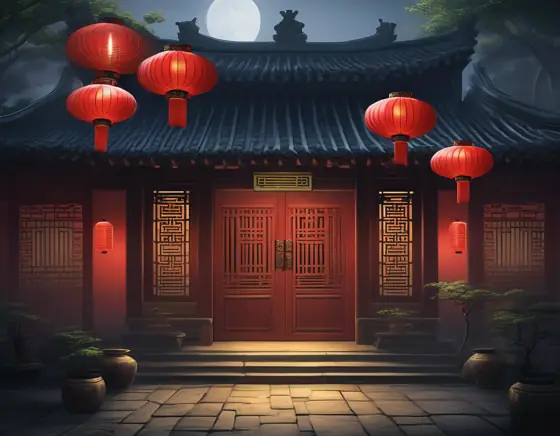
Grandma’s Old House
Lukang, Changhua · Taiwanese ghost stories · Today
The agent says the buyer signs next week. You push open the wooden door of the old family house in Lukang one last time. The kitchen still smells of grandma’s fried rice noodles, but the stove is cold. The wall clock has stopped at ten past four, about when you used to get home from school. From the shrine hall comes a soft cough.
Lukang has many old houses like this, sold one by one once the grandchildren moved to the cities. The shrine hall and the family book are a family’s roots, back to the crossing from the mainland. (This family is made up.)
Play “Grandma’s Old House”
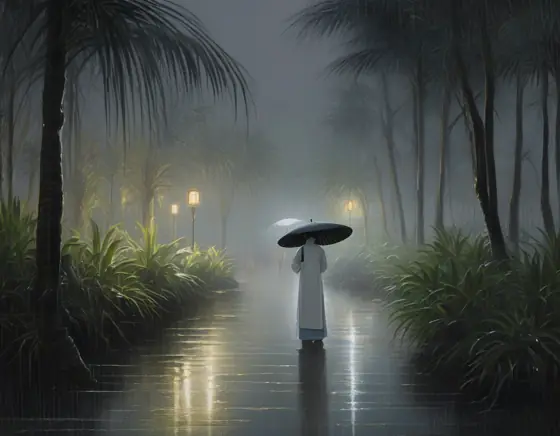
Sister Lintou
Tainan · Taiwanese ghost stories · Qing era
Nobody goes near the pandanus grove by the sea outside Fucheng when it rains. Everyone says Lintou-jie was robbed of every coin by Zhou Ya-si, walked into the grove with her child and never came out, and on rainy nights you can hear her weeping. Tonight you shelter from the rain in the diviner’s bamboo hut, and in the doorway stands a woman soaked through, a mouldy copper coin in her palm: “Sir, take me across the sea to find him.”
Lintou-jie is one of Tainan’s best-known ghost stories, told since the Qing, later filmed and staged as Taiwanese opera. Pandanus is a common shrub on Taiwan’s shores, its leaves edged with thorns.
Play “Sister Lintou”
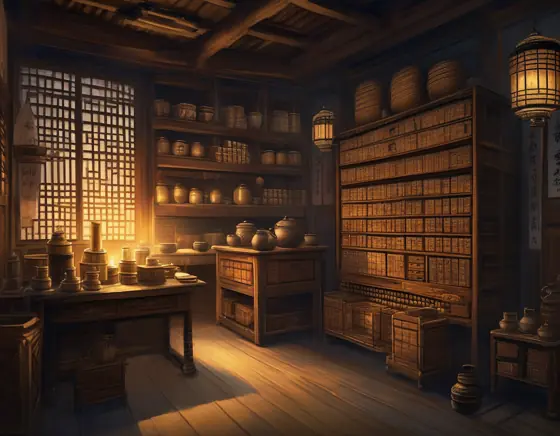
Zhou Cheng Crosses to Taiwan
Dadaocheng, Taipei · Taiwanese ghost stories · Qing era
In a Dadaocheng tea house the tea sorters have gone home, leaving only you, the new hand, minding the roasting baskets. The counting-room drawer is stuffed with letters, every envelope addressed to one name: Zhou Cheng. The writer was Yue-li. She crossed from Quanzhou to find her husband, and when she found him he had married someone else. At midnight there are a woman’s footsteps upstairs: a step, and a pause.
“Zhou Cheng Crosses to Taiwan” is a tale from Qing-era Taipei, later made into Taiwanese opera, about a man who came over to make his fortune and abandoned his wife. The Xiahai City God Temple stands on Dihua Street in Dadaocheng, as busy with worshippers today as ever.
Play “Zhou Cheng Crosses to Taiwan”
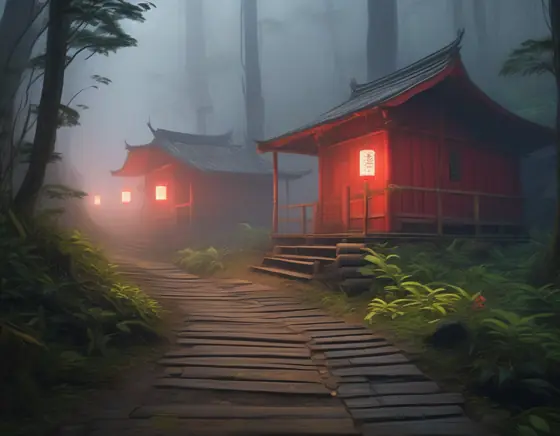
The Mountain Folk
A logging road, Central Range · Taiwanese ghost stories · Folk
Ah-Ming said he would check the trail ahead. Two hours on, he hasn’t come back. Fog fills the forestry road in the Central Range and the radio gives only static. You shelter in the old logging camp’s hut and hear a child laughing in the trees, but there are no children on this mountain. The old people down in the village said: if the mo-sin-a take someone, call his full name and he can find his way back.
The mo-sin-a are the most widespread tale of Taiwan’s mountains: someone goes missing, and when found says a little figure led them on, their mouth full of mud or leaves. Hikers still warn each other: if you hear your name called, don’t answer straight away.
Play “The Mountain Folk”
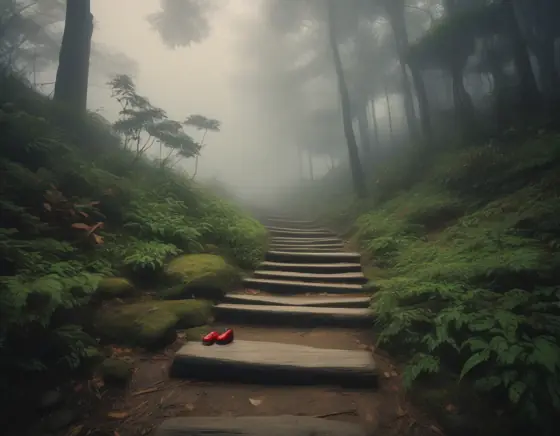
The Girl in Red
Dakeng, Taichung · Taiwanese ghost stories · Today
In a box at a secondhand shop is a videotape labelled “Dakeng hike”. You take it home and play it: a family laughing along a mountain path, and at the very back, a little girl in red. In the whole tape, not one of them looks back at her. You count three times. There is no child in that family.
In 1998 a family’s hiking video from Dakeng, Taichung, was shown on a TV programme with a little girl in red following behind. It became Taiwan’s most famous urban legend and later a film series. This tape is made up.
Play “The Girl in Red”

The Drowned Seek a Stand-in
A ferry landing, Tamsui River · Taiwanese ghost stories · Folk
It’s the seventh lunar month, and grandpa told you three times to stay away from the river. You went to watch the sunset on the Tamsui anyway, and when you look up the last ferry has gone. The old house at the landing still has a light on, so you go in out of the wind. Out on the water someone is calling your name, gently, again and again.
“The water ghost seeks a substitute” is something every Taiwanese child hears: the drowned must wait for someone to take their place before they can be reborn, so don’t swim in ghost month. Ghost Festival rites everywhere float water lanterns to light the way for the souls in the water.
Play “The Drowned Seek a Stand-in”
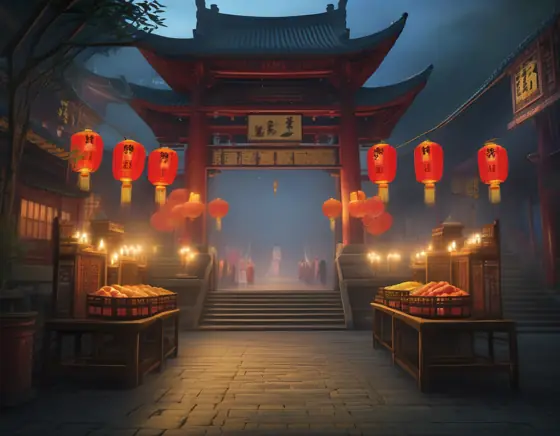
The Gates Close
Keelung Ghost Festival · Taiwanese ghost stories · Folk
The last night of Keelung’s Ghost Festival, and you are helping clear the offerings at the old clan hall. Outside the lantern poles go dark one by one; the old man says that when the lights go out, the wandering souls can’t find their way back. The wind swings the hall door shut. You push twice; it won’t move. In an hour, the Gate of the Dead closes.
Keelung’s Ghost Festival began in the Xianfeng years of the Qing; the clan associations take turns as chief host, and it has run for more than a hundred and sixty years, Taiwan’s best-known Ghost Festival.
Play “The Gates Close”
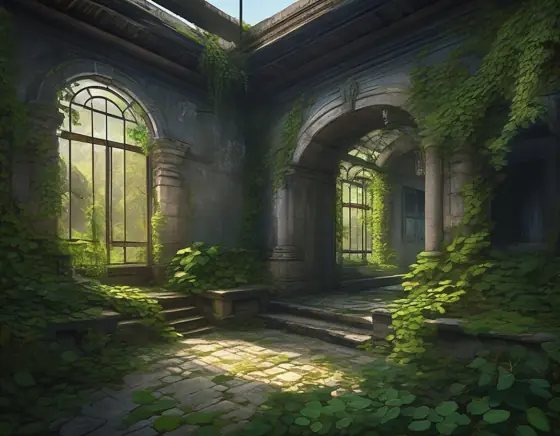
The Minxiong Mansion
Minxiong, Chiayi · Taiwanese ghost stories · Japanese era
Your classmates bet you a thousand dollars you won’t walk into the empty mansion at Minxiong alone. You do. The front door slams behind you, your phone has no signal, and upstairs someone is combing her hair, one stroke, then another. They all say a maid of this house once threw herself into the well in the yard.
The Minxiong haunted house was built in 1929 as the Liu family’s Western-style mansion, later abandoned, and became Taiwan’s most famous haunted house. The maid in the well is only what people say; no one has ever shown it was true.
Play “The Minxiong Mansion”
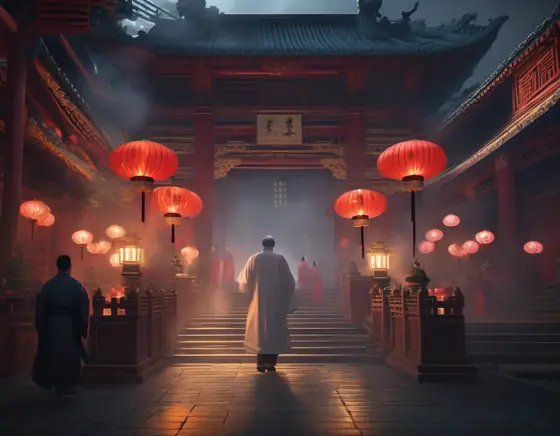
The City God’s Night Court
Hsinchu City God Temple · Taiwanese ghost stories · Folk
The rice-noodle soup stall in front of Hsinchu’s City God Temple is about to close, and you are on your last spoonful. A cold wind, and two men are standing by your table, one very tall, one very short. The tall one checks a little book: “It’s time. Come.” You are led into the temple, where the judge opens a thick register, finds your name, and frowns.
Hsinchu’s City God Temple was built in the Qianlong years of the Qing, and its City God is of very high rank. Taiwanese say he judges the living by day and the dead by night.
Play “The City God’s Night Court”
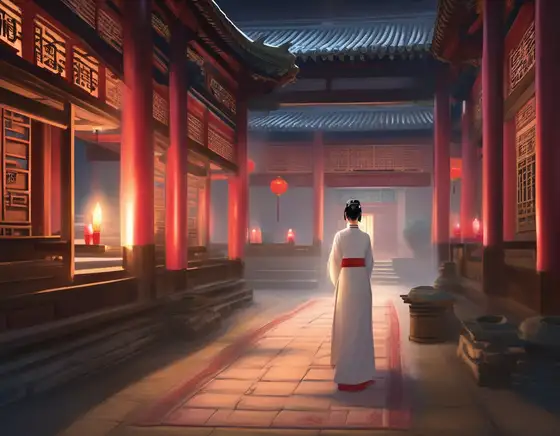
Chen Shou-niang
Tainan · Taiwanese ghost stories · Qing era
Fucheng in the Daoguang years. Chen Shou-niang was widowed young. Her mother-in-law wanted to make money from her and tried to force her into what she would not do; she refused, whatever it cost, and in the end she was killed. The magistrate took silver and buried the case. Ever after, Fucheng’s nights rang with a woman weeping, so loud that not even the City God could quiet her. Tonight you are shut in the old house where she lived.
Chen Shou-niang is Tainan’s most famous vengeful ghost, her story told from the Qing to today. Her tablet is still in the shrine beside the Confucius Temple.
Play “Chen Shou-niang”
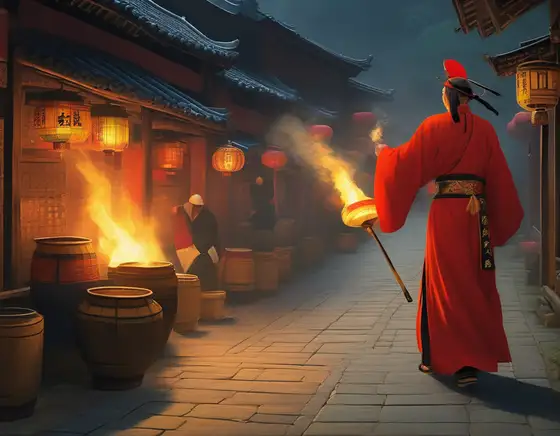
Sending Off the Sha
A seaside village, Changhua · Taiwanese ghost stories · Folk
Tonight the coastal villages of Changhua will “send off the rice dumpling”. At dusk every house shuts its doors and pastes up charms; the grown-ups say: don’t look at what passes in the road. The priest chants in the temple. You are his apprentice: get everything ready and walk with the procession that carries the ill fortune to the sea. Your master told you only one thing: go by this road, and come back by another.
Sending off the rice dumpling is a custom of Changhua and Lukang: when someone has died a troubled death, a priest is asked to send the lingering ill fortune out to sea, by a road that must not be the road back, and everyone keeps out of its way.
If you or someone near you is struggling, call Taiwan’s 1925 helpline; someone answers 24 hours a day.
Play “Sending Off the Sha”
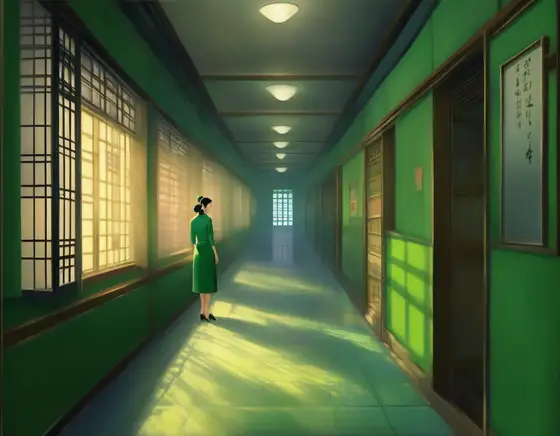
The Reading Circle
A teachers’ college, 1950s · Taiwanese ghost stories · Postwar
A teachers’ college in the 1950s. Every Wednesday night Mr Lin and a few students met in a little room behind the dormitory to read books that were not allowed then. One day an officer walked into class holding a list, and Mr Lin never came back to teach. Seventy years later, tonight, the old building comes down tomorrow; you stay behind alone to clear it, and at the end of the corridor someone is quietly reading aloud.
From 1949 to 1987 Taiwan lived under martial law for thirty-eight years. In that time many people were taken for reading a book or saying a sentence, and many were sent to Green Island. Green Island and Jingmei are now sites of the National Human Rights Museum. (The school, the teacher and the students are made up.)
Play “The Reading Circle”
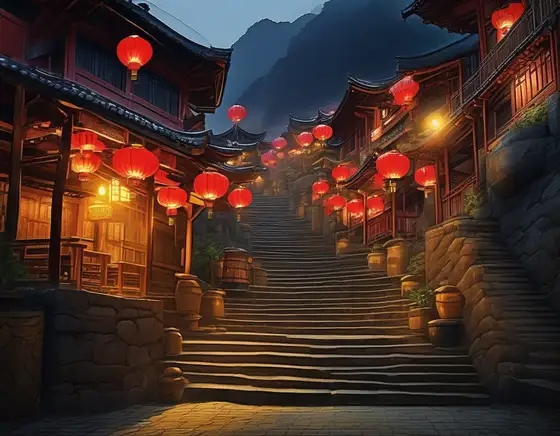
The Gold of Jiufen
Jiufen, New Taipei · Taiwanese ghost stories · Japanese era
Jiufen in the 1930s, the gold seemingly endless, the wine houses and the theatre on Shuqi Road full all night. The miners have a saying: deep in the workings runs a vein of gold that glows, and you must not touch it. A few days ago someone chipped off a piece and carried it out, and since then the carbide lamps in the tunnels have gone out one by one. Tonight it’s your turn to go down.
Gold was found at Jiufen at the end of the Qing; the town was busiest in the Japanese era, and mining stopped in 1971. Miners prayed to the earth god before going down. Walk up Shuqi Road today and you can still see the old Shengping Theatre.
Play “The Gold of Jiufen”
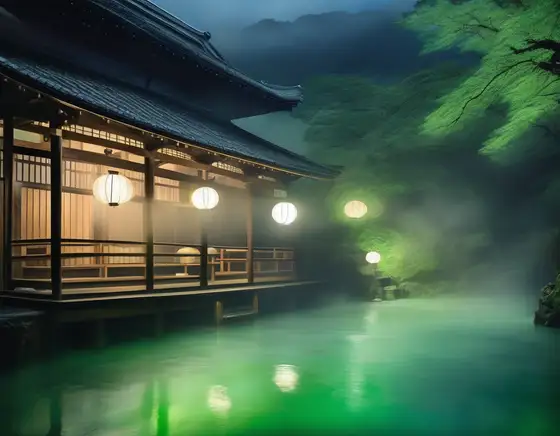
The Stone of Beitou
Beitou, Taipei · Taiwanese ghost stories · Japanese era
Beitou in the Japanese era: hot-spring inns side by side, maids carrying lanterns up and down the corridors. In the stream grows a rare stone called hokutolite; the old people say it is the heart of the spring, and take it away and the water goes cold. Tonight a guest slipped a piece into hiding, and since then the baths have been cooling little by little, and someone in the steam seems to be searching.
Hokutolite is a rare mineral found in the Beitou stream; in all the world it grows only at Beitou and at Tamagawa hot spring in Akita, Japan. The Beitou public bathhouse, built in 1913, is now the Beitou Hot Spring Museum.
Play “The Stone of Beitou”
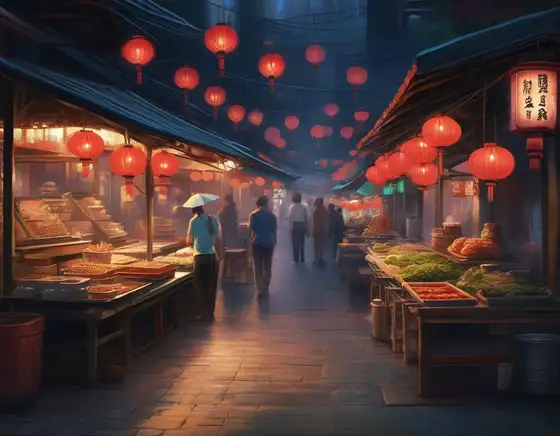
The Two O’Clock Night Market
A night market · Taiwanese ghost stories · Today
Everyone says that after the night market closes at two in the morning, an extra row of stalls appears by the temple: ring toss, goldfish scooping, oyster omelette, the owners all smiling, though no one has ever seen them by day. Tonight you missed the last bus and sit scrolling under the stop sign. At two o’clock, the lights by the temple really do come on, one by one.
Many of Taiwan’s night markets grew up in front of a temple, the earth god or Mazu looking on as everyone eats. This story is made up, though plenty of night markets really do stay open very late.
Play “The Two O’Clock Night Market”
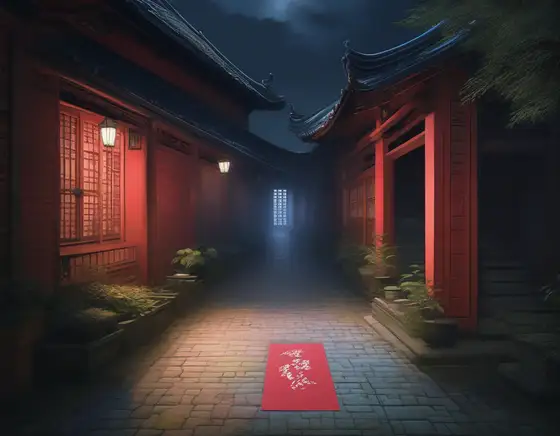
The Red Envelope
A country lane · Taiwanese ghost stories · Folk
Ever since you were small grandpa told you: never pick up a red envelope from the road. On a rainy country lane there lies a red envelope, and you bend and pick it up anyway. Inside are a lock of hair and a slip with someone’s birth date and hour. A crowd jumps out of the grass shouting “The groom!” and pulls you into an old house, where an ancestral tablet with no name stands in the hall.
A girl who died unmarried could not be placed on her own family’s altar, so families sometimes arranged a ghost marriage to give her a home; hence “never pick up a red envelope from the road”. Some built shrines for these maidens instead. (This story is made up.)
Play “The Red Envelope”
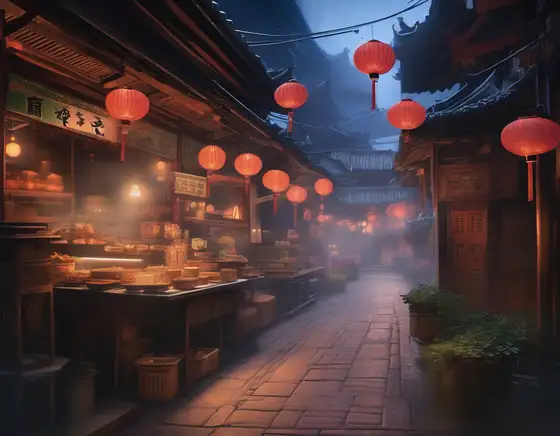
The Ghost Month Taboos
An old street in the ghost month · Taiwanese ghost stories · Folk
The seventh lunar month, and of all grandma’s warnings you remembered none: you whistled at night, left the washing out past midnight, and trod on spirit money by the road. At one in the morning the shops of the old street roll down their shutters one by one, and as you walk, the footsteps behind you seem to grow in number.
The seventh lunar month is ghost month, when the gates open and every household makes offerings. Taiwanese grow up with its rules: no whistling at night, no washing hung out, no tapping people on the shoulder, no stepping on spirit money, no swimming. Believe it or not, grandma is always right.
Play “The Ghost Month Taboos”
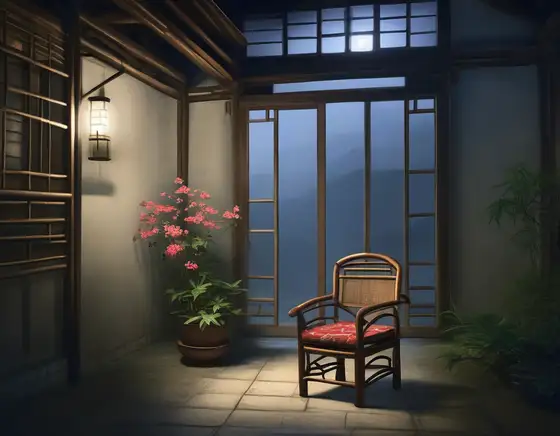
The Chair Maiden
An old house’s courtyard · Taiwanese ghost stories · Folk
Mid-Autumn night, and you and your friends are in the courtyard of the old house, trying the game grandma played as a girl: dress a bamboo chair in old clothes, tuck a flower in it, and sing together to call the chair maiden. The chair really moves, tapping a leg to answer: once for yes, twice for no. You play until late, and everyone forgets to send her home.
Calling the chair maiden was a game girls played on Lantern Festival and Mid-Autumn nights. The chair maiden is said to have been a mistreated girl; you sing to call her to answer questions, and afterwards you must always send her home properly.
Play “The Chair Maiden”

The Xinhai Tunnel
Xinhai Road, Taipei · Taiwanese ghost stories · Today
Two in the morning, light rain. You are driving a taxi along Xinhai Road when a young woman in white flags you down and asks to go through the tunnel. Once inside, the lights stream past one after another, but the exit never comes. In the mirror, the back seat is empty except for a damp purse.
The Xinhai Tunnel is in Taipei’s Wenshan district, right beside the city’s Second Funeral Parlour, so taxi drivers trade many stories of fares picked up late at night. This one is made up too. If you drive through, just keep your eyes on the road.
Play “The Xinhai Tunnel”

The Sanzhi Pod Houses
Sanzhi, New Taipei · Taiwanese ghost stories · Today
Summer 2007. You and a few friends ride out to the Sanzhi shore at midnight to photograph the abandoned pod houses. Round houses one after another, their paint faded to pink and baby blue, every window broken. They have had no power for thirty years, yet the one at the very back has its lights on. The moment you step in, the round door closes behind you.
The Sanzhi pod houses were a seaside resort built around 1980, modelled on the Finnish architect’s Futuro house. Work stopped soon after, the pods stood empty for nearly thirty years and gathered all kinds of ghost stories, and they were pulled down from 2008. This night is made up.
Play “The Sanzhi Pod Houses”
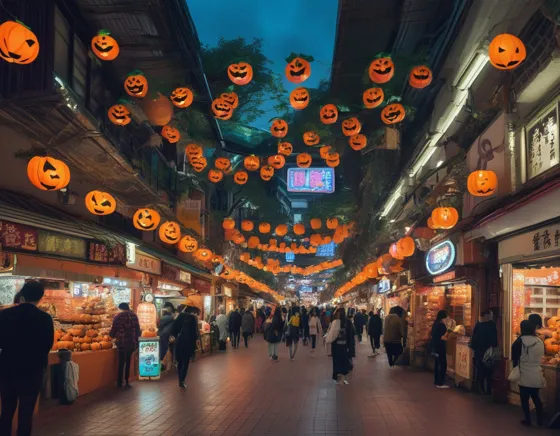
Halloween in Ximending
Ximending, Taipei · Taiwanese ghost stories · Today
On the night of October 31st an old street in Ximending holds a Halloween costume party, this year’s theme Taiwan’s own ghosts: a moshinah, a Grandaunt Tiger, someone under Sister Lintou’s long hair, someone in dripping clothes who says he is a water ghost. When the host calls the roll there is one name too many, and no one has seen that guest take the mask off all night. At midnight the pumpkin lanterns before the Red House go out one by one, and the doors to the main road will not open.
Halloween is a Western holiday: October 31st is All Hallows’ Eve, when the dead were said to walk. Taiwan’s own night of ghosts is Zhongyuan in the seventh lunar month, when every household sets out a table for the “good brothers”. The Red House was built in 1908 as Taiwan’s first public market set up by the government. This story is made up.
Play “Halloween in Ximending”
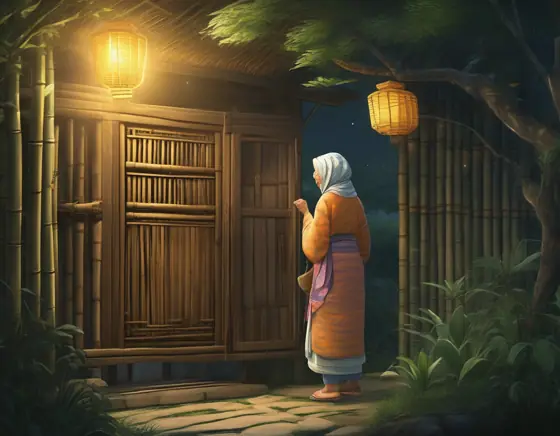
Auntie Tiger
A house below the hills · Legends and folklore · Folk
Before she went out, mum said: whoever comes tonight, don’t open the door. At midnight someone knocks, a kindly voice: “It’s your great-aunt, it’s so cold out here.” Your little brother ran and opened it. Now the house is pitch dark, and from the bed comes a crunch, crunch. Great-aunt says she is eating peanuts.
Tiger Aunt is the tale Taiwanese grown-ups use to scare children. The versions differ from place to place, but they all mean much the same: when a stranger knocks, don’t just open the door.
Play “Auntie Tiger”
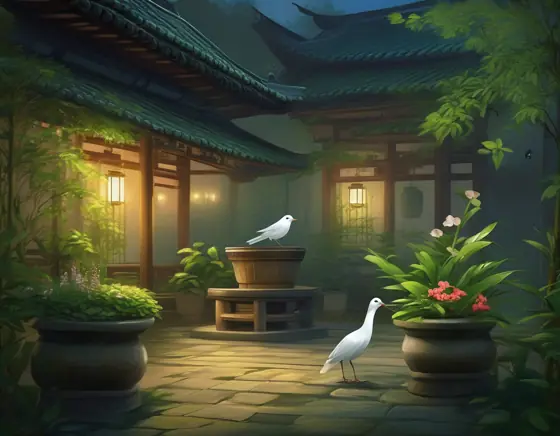
The Snake Lord
A mansion in the hills · Legends and folklore · Folk
The master of the great house in the hills is the Snake Lord, and since the third sister married him she has lived well. The eldest sister came to visit, saw the rooms full of gold and silver, and turned green. Tonight you are a guest here too. The third sister is gone, and in her seat sits the eldest, her face caked with powder. Outside the window a little bird sings and sings: “Hair combed smooth and shining, but the eldest took the youngest’s place.”
“The Snake Lord” is an old folk tale from Taiwan and southern Fujian, like Tiger Aunt a bedtime story grandmothers tell. Its ending changes from place to place.
Play “The Snake Lord”
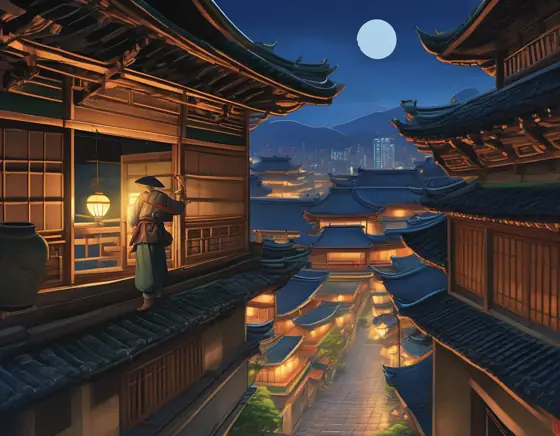
Liao Tian-ding
Dadaocheng, Taipei · Legends and folklore · Japanese era
Taipei at the end of the Meiji years, and every few days the papers are full of Liao Tian-ding: which rich man he robbed this time, how the police came up empty again. You are his young apprentice. Tonight he has one job for you: in the safe of a mansion in Dadaocheng lies a bundle of land deeds swindled from a village. The dogs downstairs start barking, and a policeman’s whistle sounds from the end of the street.
Liao Tian-ding was a real man, who died at Bali in 1909. The Japanese authorities called him a thief; Taiwanese folk made him a Robin Hood and put him into glove-puppet shows and films. There is still a temple to him at Bali today.
Play “Liao Tian-ding”

Koxinga and the Bird Rock
Yingge, New Taipei · Legends and folklore · Koxinga era
Koxinga’s army is marching north. At Yingge a sudden fog pours off the hill, and the men at the front vanish one after another. The old soldiers say the parrot spirit on the hill is breathing it out. You are a gunner, sheltering with the troops in a pottery kiln at the hill’s foot; the kiln is still warm, and the fog keeps seeping in under the door.
This is how Yingge got its name, the story goes. The Parrot Rock still stands on the hill above Yingge, and a trail leads up to it. Whether Koxinga ever came to Yingge, no history says; in legend, he slays monsters wherever he goes.
Play “Koxinga and the Bird Rock”

Mazu and Her Two Generals
A fishing boat, Taiwan Strait · Legends and folklore · Folk
You went out at midnight to set longlines; the forecast said light rain. After twelve the waves rose higher than the boat, the cabin doors jammed, and seawater seeps through the cracks. The old skipper takes Mazu’s flag down from the shrine: “Beside Mazu stand Thousand-Mile Eye and Wind-Borne Ear. One can see the harbour; one can hear the temple bell.”
Many Taiwanese fishing boats carry a shrine to Mazu. Thousand-Mile Eye and Wind-Borne Ear were once two demons; after Mazu tamed them, they have stood at her side ever since.
Play “Mazu and Her Two Generals”
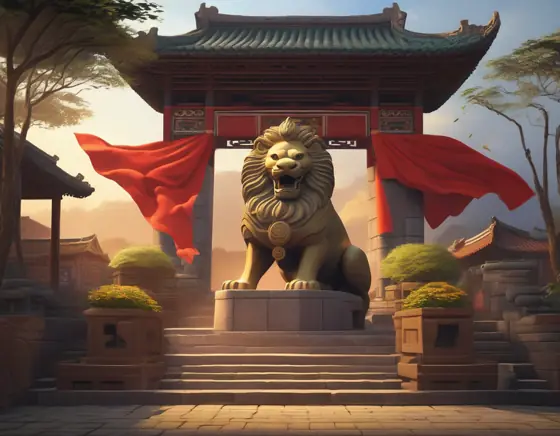
The Wind Lion
A stone village, Kinmen · Legends and folklore · Folk
Come October, the northeast monsoon blows sand into Kinmen’s villages. This year the wind is fierce, and the wind lion at the village gate is buried to its neck. Grandma mutters as she shuts the windows: “The wind lion must face the wind and wear its red cape, or the village isn’t safe.” The wind whirls down the lanes until you can’t keep your eyes open.
Kinmen used to be windy and nearly treeless, so villages set wind lions at their gates. More than sixty still stand, many wearing red capes the villagers sewed for them.
Play “The Wind Lion”

The Tree Spirit Tower
Alishan, Chiayi · Legends and folklore · Japanese era
Alishan in the Showa years: the little trains carry thousand-year-old cypress down the mountain, load after load. The old fellers say that at night someone sighs in the forest, but go and look and there are only stumps, ring upon ring. Tonight you have the night watch at the logging office; the sighing comes closer, and the last timber train goes down at first light.
In 1935 the forestry office built the Tree Spirit Tower at Alishan to honour the giant trees it had felled, and it still stands in the forest. The Alishan Forest Railway still runs too, famous for the spiral around Dulishan and its forward-and-back zigzags.
Play “The Tree Spirit Tower”
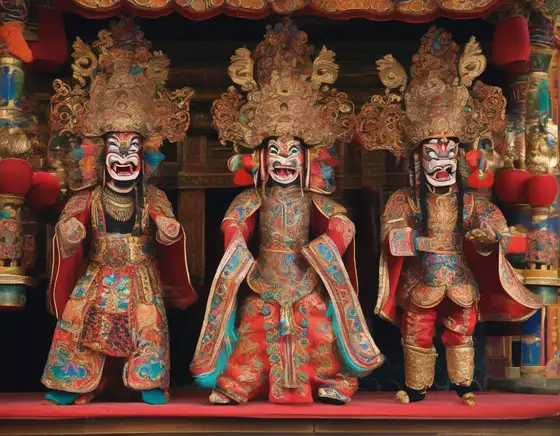
The Glove Puppets
Yunlin · Legends and folklore · Folk
An old puppet troupe in Yunlin, with three days of shows at the temple from tomorrow. The master had two drinks and went to bed, telling you to pray to the stage god before midnight and set the puppets out on the stage. You open the puppet chest: empty, even the hero gone. From the dark of the store comes a tiny pattering, tock, tock, tock, like someone running in clogs.
Glove puppetry came to Taiwan from Fujian in the Qing, and Yunlin has produced many of its masters. Many troupes still pray to the stage god, Marshal Tiandu, before a show.
Play “The Glove Puppets”

Princess Balenge
A legend of the Rukai · Legends and folklore · Indigenous peoples
In the Rukai village everyone knows Princess Balenge has fallen in love with Adalio, the snake king of the great lake in the mountains. He is coming to ask for her hand, and the village has asked for glass beads of seven colours as the bride price. Tonight the suitor’s party arrives, but the beads that were made ready lie scattered through the slate houses.
This is one telling of the Rukai legend of Princess Balenge. Glass beads are treasured heirlooms of the Rukai and the Paiwan.
Play “Princess Balenge”

The White Deer of Sun Moon Lake
Sun Moon Lake, Nantou · Legends and folklore · Indigenous peoples
Long ago, Thao hunters saw a snow-white deer in the mountains. They chased it over one ridge after another for many days, until their food ran out. The white deer always stopped a little ahead and looked back at you, as if waiting for you to catch up.
This is the Thao legend of how their ancestors found Sun Moon Lake. The Thao, one of Taiwan’s sixteen Indigenous peoples, have lived by the lake for generations.
Play “The White Deer of Sun Moon Lake”

The Tide at Lu’ermen
Lu’ermen, Tainan · Legends and folklore · Koxinga era
April 1661, and Koxinga’s fleet lies outside Luermen. The channel is narrow and shallow, too shallow for the big ships, and the Dutch believe no one would dare it. You are a fisherman who grew up on these waters and could find every sandbar with your eyes shut. Tonight someone knocks at your door: “Koxinga asks you to guide us in.”
In April 1661 Koxinga’s fleet did enter by Luermen and began the siege of Fort Zeelandia. Legend says Mazu sent the great tide; there are temples to her at Luermen today.
Play “The Tide at Lu’ermen”

The Tenth Stone Tortoise
Chihkan Tower, Tainan · Legends and folklore · Qing era
Nine stone tortoises stand in a row before Chihkan Tower, each carrying a stone tablet on its back. The old man who sells rice puddings at the lane’s end says there were really ten shipped over from the mainland, and as they were unloaded at the harbour one fell into the water and was never fished out. Tonight you are staying in an old house beside the tower, and at midnight something by the water is knocking on stone, slowly, once, and again.
The nine tortoise tablets before Chihkan Tower were set up in the Qianlong years to record the putting down of the Lin Shuang-wen uprising. That there were ten, and one fell into the water on the way, is an old Fucheng tale.
Play “The Tenth Stone Tortoise”
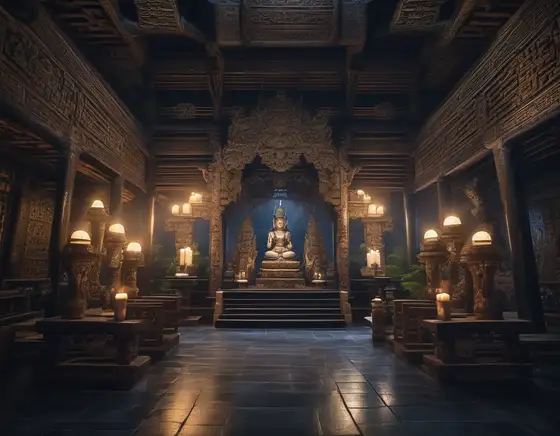
The God Whose Nose Falls
Sanxia, New Taipei · Legends and folklore · Folk
The old people of Sanxia say that when the Qingshui Patriarch’s nose falls off, something terrible is coming. Tonight you are helping keep watch at the temple; the rain grows heavier and the Sanxia river louder. At one in the morning there is a thud from the main hall. You shine your torch: the Patriarch’s nose is lying on the altar table.
In Sanxia and Monga people say the Qingshui Patriarch’s nose drops off before a disaster as a warning, hence “the Patriarch who drops his nose”. The carvings of the Sanxia temple took the painter Li Mei-shu and his craftsmen decades, from 1947 on.
Play “The God Whose Nose Falls”

Half-Screen Mountain
Zuoying, Kaohsiung · Legends and folklore · Folk
Long ago an old man selling sweet rice balls came to the foot of a hill in Kaohsiung. His sign said: “One for a penny, three for nothing.” Everyone grabbed the free ones, bowl after bowl, and the hill grew lower day by day. Tonight you are in the village at the hill’s foot; the old man has packed up his stall and sits at the village gate, saying he is waiting for someone who will pay him one honest penny.
The legend says the old man was an immortal and the rice balls were made of the hill’s earth, so the greedy ate half of it away, and the hill is called Banping, “half a screen”. It stands in Zuoying, Kaohsiung, and limestone quarrying really did carry much of it away.
Play “Half-Screen Mountain”

Mazu’s Island
Nangan, Matsu · Legends and folklore · Folk
The old people of Nangan say that Mazu, the girl Lin Mo-niang, was swept away by the waves trying to save her father at sea, and drifted ashore here, where the villagers buried her with care. Tonight a thick fog has come down on the sea, the village boats are not home yet, and the wind rattles the windows of the stone houses. Someone says: light the lamp on the shore, quickly.
Legend says Mazu’s body drifted to Nangan and was buried by the shore, and so the islands are called Matsu. The Tianhou Temple on Nangan still keeps what is said to be her grave.
Play “Mazu’s Island”
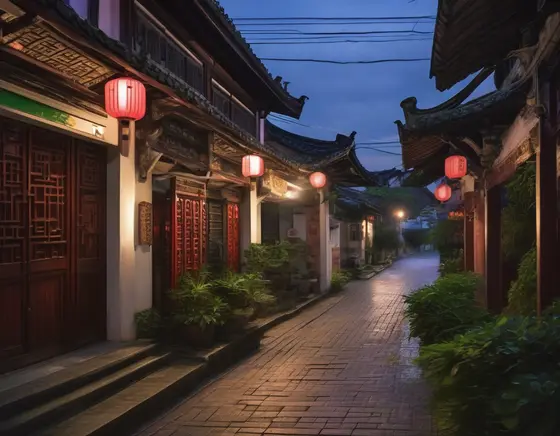
The Sword Lions of Anping
Anping, Tainan · Legends and folklore · Koxinga era
In Anping’s old lanes, over every door hangs a lion with a sword in its mouth. Grandpa says the sword lions block whatever bad things blow in from the sea. Tonight, before the typhoon, every sword in every lion’s mouth along the lane has vanished. The wind pours in off the sea, doors slam shut one after another, and the lion over the last house in the lane speaks: “My sword. Give it back.”
Anping’s old houses often hang a sword lion over the door or on the wall, to ward off evil and ill fortune. One story ties them to Koxinga’s army: soldiers home from duty hung their lion-painted shields by the door with a sword slotted through. Sword lions are everywhere on Anping Old Street today. The stolen swords are made up.
Play “The Sword Lions of Anping”
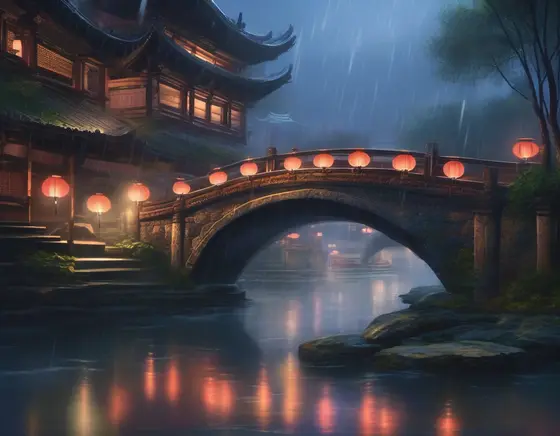
The Tall and the Short Generals
A City God temple · Legends and folklore · Folk
A night of heavy rain, and you shelter under the bridge by the City God temple. A very tall man in white comes along under an umbrella and asks you: “Have you seen a short man in black? We were to meet here. I went home for an umbrella; he said he would wait.” As he turns away the path under the bridge floods, and you cannot get out.
Xie Bi-an, the tall Seventh Lord, and Fan Wu-jiu, the short Eighth, are the two ghost-catching generals at the City God’s side. Folk tradition says they were close friends who agreed to meet under a bridge; heavy rain came, Xie went home for an umbrella, Fan kept his word and would not leave, and the water rose… which is why the two always appear together at temple fairs. The night under the bridge is made up.
Play “The Tall and the Short Generals”
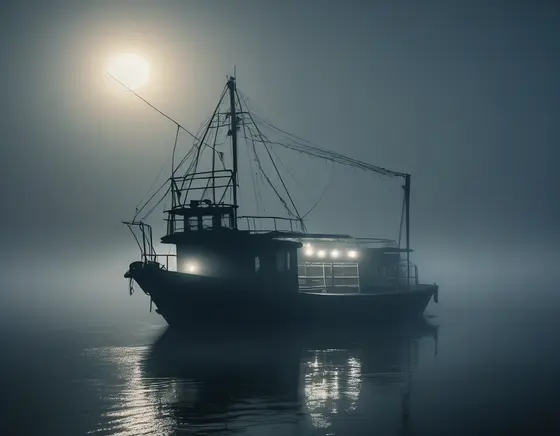
Turtle Island
Toucheng, Yilan · Legends and folklore · Folk
The old fishermen of Toucheng say Turtle Island is a great sea turtle that was once ordered back to the deep, but loved the people of the Lanyang plain too much and stayed. Tonight you are out on a fishing boat when thick fog comes down. In the fog the island seems slowly to turn its head; the compass spins, and the cabin doors jam one after another.
Turtle Island lies about ten kilometres off Yilan; from Toucheng it looks like a turtle afloat, and it is the emblem of home for Yilan people. People once lived on it; in 1977 the islanders moved to Toucheng, and it is now a protected area with limited landings. The turtle turning its head in the fog is legend, and made up.
Play “Turtle Island”

The Eighteen Lords
Shimen, New Taipei · Legends and folklore · Qing era
Midnight, and the wind is strong on the north coast. You have driven a taxi all day when an old hand at the rank calls: “Go to the Eighteen Lords temple at Shimen and light incense for me. Take cigarettes.” The temple is ablaze with light and busy even at midnight. But the moment you step out, the car-park lamps go out one by one, and from behind the temple a dog barks, once, and again.
The story goes that in the Qing seventeen men were lost at sea and washed ashore at Shimen, where the villagers buried them together; their dog leapt into the grave to stay with them, and, moved, the villagers honoured all eighteen as the Eighteen Lords. The temple is known for being busiest at night, and worshippers often offer a lit cigarette. The old hand and this night are made up.
Play “The Eighteen Lords”
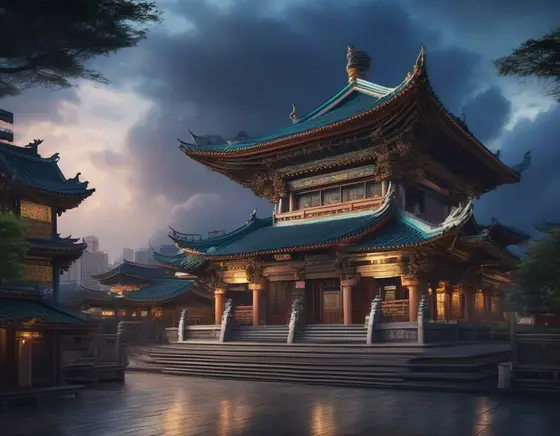
The Great Lord’s Wind, Mazu’s Rain
Bao’an Temple, Dalongdong, Taipei · Legends and folklore · Qing era
The old folk of Dalongdong all tell it: when the Great Lord was young he wished to marry Mazu, she refused, and the two have been at odds ever since. On his birthday Mazu always sends rain to soak his procession; on hers, he always sends wind to blow the flowers from her hair. Tonight you are helping at the Bao’an Temple get ready for tomorrow’s procession, and the keeper says only: “Mind whose birthday it is tomorrow, and don’t bring the wrong thing.”
The Great Lord, Baosheng Dadi, was the Song-dynasty healer Wu Tao; the Bao’an Temple at Dalongdong was begun in the Qianlong years of the Qing and is busy with worshippers to this day, its restoration honoured with a UNESCO Asia-Pacific heritage award. “The Great Lord’s wind, Mazu’s rain” is an old Taiwanese saying: the third lunar month brings spring wind and rain, and people made the weather into a story of two gods.
Play “The Great Lord’s Wind, Mazu’s Rain”
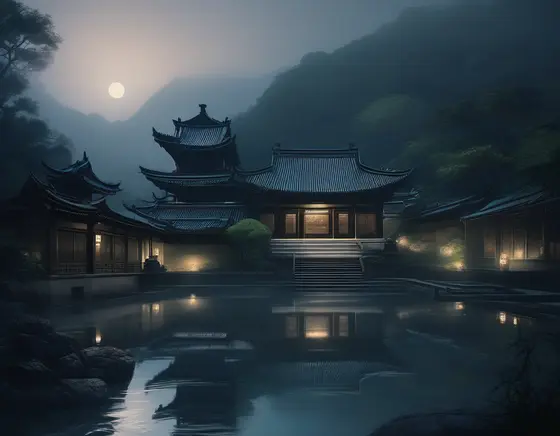
Sword Pool
Jiantan, Taipei · Legends and folklore · Koxinga era
In the Guangxu years there was a deep pool where the Keelung River bends. The old ferryman says a giant carp spirit lives at its bottom and used to overturn boats, until Koxinga passed by and threw his sword into the pool, and the carp has not dared stir since. Tonight a light really does shine up from the bottom, a thick mist comes down, and the ferry, slipped from its mooring, drifts by itself towards the middle.
Jiantan, “Sword Pool”, takes its name, the legend says, from Koxinga’s sword. On the hill above it the Japanese built the Taiwan Shrine; after the war it was pulled down and the Grand Hotel built on the site. The river has since been straightened and the pool is much smaller. The ferryman and this night are made up.
Play “Sword Pool”
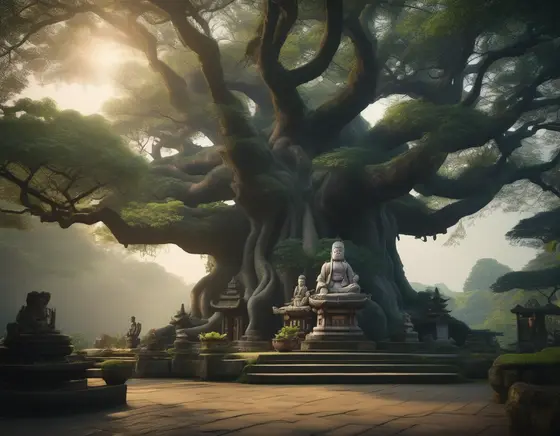
The Earth God and His Wife
The village earth-god shrine · Legends and folklore · Folk
Under the great banyan at the village edge stands the earth-god shrine, with the Earth God and the Earth Mother. The old folk say she is mean, that she would not let everyone grow rich, and so few people pray to her. This year, just before the year-end feast, her statue has gone missing, and the Earth God sits alone. The keeper says: “To ask her back, first know what she said back then, so as not to wrong her.”
The Taiwanese tale says the kind Earth God wished everyone rich, and his wife objected: “If all are rich, who will carry the sedan chairs, who will work the fields?” And so the world keeps its rich and poor, and some people will not pray to her for it. Another telling says she was keeping the world in balance. The 2nd of the second lunar month and the 16th of the twelfth, the first and last feasts of the year, both belong to the Earth God. The missing statue is made up.
Play “The Earth God and His Wife”

Shooting the Sun
A myth of Taiwan’s first peoples · Myths · Indigenous peoples
Long, long ago there were two suns in the sky, taking turns, and no night. The rivers dried up, the millet would not grow, and the old and the young fell ill. The people chose three young men, each with a baby on his back, to go and shoot down one of the suns. They planted oranges along the way so they could find their way home. Many years they walked; the young men grew old, and the babies grew up. You are one of them.
The Atayal, the Bunun and several other Indigenous peoples of Taiwan all tell of shooting the sun, each in their own way; this is one Atayal telling. Taiwan today recognises sixteen Indigenous peoples.
Play “Shooting the Sun”

The Flood and Jade Mountain
A myth of the Tsou · Myths · Indigenous peoples
Long ago a giant eel lay across the river mouth and dammed the water. Day after day the flood rose over the plains, and the ancestors of the Tsou climbed higher and higher until they reached the top of Jade Mountain. Up there food grew scarce, and everyone was thinking the same thing: who can make the eel move?
This is one telling of the Tsou flood myth, in which Jade Mountain is where the ancestors escaped the flood.
Play “The Flood and Jade Mountain”

The Day the Sky Was Pierced
A Hakka village · Myths · Folk
The twentieth of the first month, the Hakka Day of the Holed Sky. Grandma says that long ago the sky sprang a hole and Nüwa smelted stones of five colours to mend it, so on this day nobody works the fields and everyone fries sweet rice cakes to “patch the sky”. Tonight you look up, and there really is a crack across the night sky, a cold wind leaking through.
The Day of the Holed Sky is a Hakka festival on the twentieth of the first month, remembering how Nüwa mended the heavens; people rest and fry sweet rice cakes to patch the sky.
Play “The Day the Sky Was Pierced”
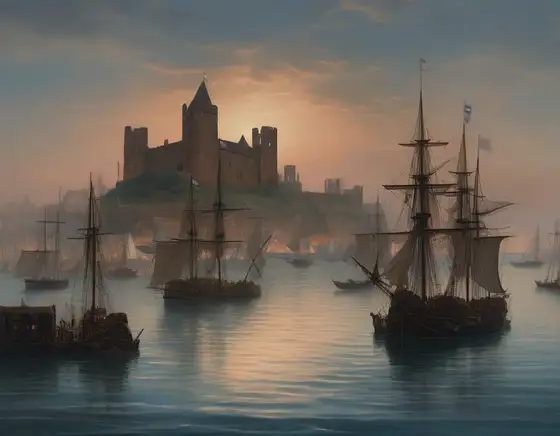
Fort Zeelandia
Anping, Tainan · History · Dutch and Spanish era
January 1662, and Fort Zeelandia has been under siege for nine months. The wells are low, half the powder is gone, and Koxinga’s banners draw closer every day. You are the fort’s interpreter, at home in Dutch and in Chinese. Tonight Governor Coyett calls you into his office; a treaty lies open on the desk: “This must be in Koxinga’s hands by morning.”
Fort Zeelandia is today’s Anping Old Fort in Tainan. A stretch of its red-brick wall still stands beside it, the mortar said to be made of sugar water, sticky rice and oyster-shell lime.
Play “Fort Zeelandia”

Fort San Salvador
Heping Island, Keelung · History · Dutch and Spanish era
August 1642, on the island off Keelung. The Spanish have held it for sixteen years, Manila has already called most of the soldiers home, and the Dutch fleet is outside the harbour. The friar calls you into the sacristy: “The silver chalice must not fall into their hands.” Outside, the sea wind rocks the church bell gently.
The island is today’s Heping Island in Keelung, where archaeologists have recently uncovered the remains of the old church and its graves.
Play “Fort San Salvador”
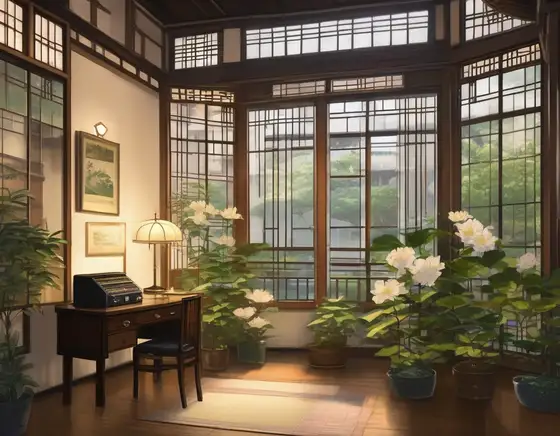
1947: A Letter Never Sent
228 Memorial Museum, Taipei · History · Postwar
In March 1947 a bookseller in Dadaocheng wrote to his seven-year-old daughter: when he got home he would take her to see the new storybooks. The letter was never sent. Seventy-odd years later that daughter, Mrs Hsiu-lan, gave what the family had kept to the 228 Memorial Museum. Tonight you are working late sorting it, and the letter falls out of an old account book.
On 27 February 1947 a clash over contraband cigarettes in Dadaocheng became, the next day, protest across Taiwan; the crackdown and the White Terror that followed took family members from a great many homes. In 1995 the government formally apologised, and 28 February became Peace Memorial Day. The Taipei 228 Memorial Museum stands in the old broadcasting station. (This letter and this family are made up, but there are many stories like it.)
Play “1947: A Letter Never Sent”

Three Great Harbours
Lukang, Changhua · History · Qing era
The Qianlong years, Lukang’s harbour crowded with junks and the streets full of porters carrying rice and sugar. You keep the books for the Quanzhou merchants’ guild, and at first light a ship loaded with rice and sugar sails for Quanzhou. The manager said before he left: the manifest needs the guild’s seal, or the ship can’t clear the port. And the manifest has gone missing.
Qing Taiwan’s three busiest ports were known as “first the capital, second Lukang, third Monga”: Tainan, Lukang and Taipei’s Monga. Merchants formed guilds and shipped Taiwan’s rice and sugar across the strait in junks. Later the harbour silted up, and Lukang slowly grew quiet.
Play “Three Great Harbours”

Mackay of Tamsui
Tamsui, New Taipei · History · Qing era
Tamsui in the 1880s. George Leslie Mackay, the missionary from Canada, preaches and pulls teeth and treats the sick. Tonight he has gone to see a patient in Wugu, leaving you in charge of the Mackay Hospital: a fevered patient waiting for medicine, and an old man with toothache groaning at the door, unable to sleep.
Mackay came to Tamsui in 1872; he is said to have pulled more than twenty thousand teeth, treated many for malaria with quinine, and built the Mackay Hospital and Oxford College. He married Tiu Chhang-beng of Wugu and is buried in Tamsui.
Play “Mackay of Tamsui”

Liu Mingchuan’s Railway
Shiqiuling, Keelung · History · Qing era
Shiqiuling, Keelung, 1890. The workers dug for years, hoe by hoe, and at last the tunnel is through. Governor Liu Ming-chuan has said Taiwan’s first railway will run from Keelung to Taipei, and in a few days the first train comes through here. You are the youngest of the gang, left behind tonight to mind the site, and the rain is pouring.
In 1891 the Keelung to Taipei railway opened, Taiwan’s first. Above the tunnel mouth you can still read the words Liu Ming-chuan wrote: “Heaven opens the vast land.”
Play “Liu Mingchuan’s Railway”
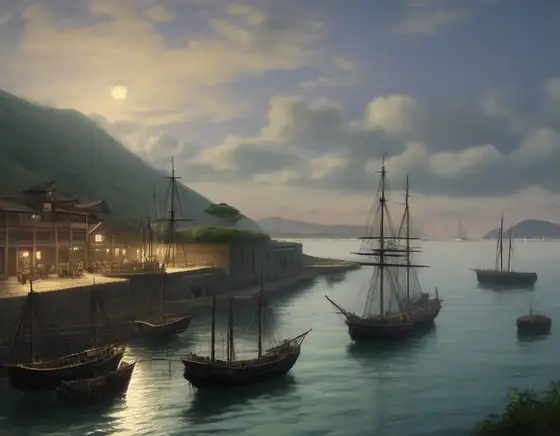
The Battle of Tamsui
Tamsui, New Taipei · History · Qing era
Autumn 1884, and French warships lie off Hobe, ready to land. General Sun Kai-hua and the Tamsui militia hold the harbour; they have been filling old boats with stones and sinking them in the channel. You are a fisherman’s child from the waterfront, and tonight you must help sink the last boat, then beat the drum to wake everyone.
At the Battle of Tamsui in the Sino-French War of 1884, Qing troops and local militia held the town; locals call it “the Westerners’ war”. The Hobe Fort built after the war still stands on the hill above Tamsui.
Play “The Battle of Tamsui”

The Wushantou Dam
Guantian, Tainan · History · Japanese era
Wushantou, spring 1930. The dam took ten years, and the farmers of the Chianan plain waited ten years. Tomorrow the water is let out, to run down the Chianan canal into the fields. You are an apprentice at the works office; the engineer Hatta wants the sluice gates ready tonight, but someone has put the plans away who knows where.
The Wushantou reservoir and the Chianan canal were finished in 1930 under the Japanese engineer Yoichi Hatta; the plain had water at last and became Taiwan’s rice bowl. Every 8 May people still gather by the reservoir to remember him.
Play “The Wushantou Dam”

The Hayashi Department Store
West Central, Tainan · History · Japanese era
1932: a five-storey department store opens on Suehiro Street in Tainan. Locals call it “the five floors”, and it has the first lift in southern Taiwan. You are the lift girl. After closing the telephone rings: an old lady left the pocket watch she bought for her grandson in the store, and he takes the train to Tokyo for university first thing tomorrow.
Hayashi Department Store opened in Tainan in 1932, the first in southern Taiwan with a lift, with a little Shinto shrine on the roof. Closed for many years after the war, it reopened in 2014; the rooftop shrine is still there, and bullet holes from the Second World War.
Play “The Hayashi Department Store”
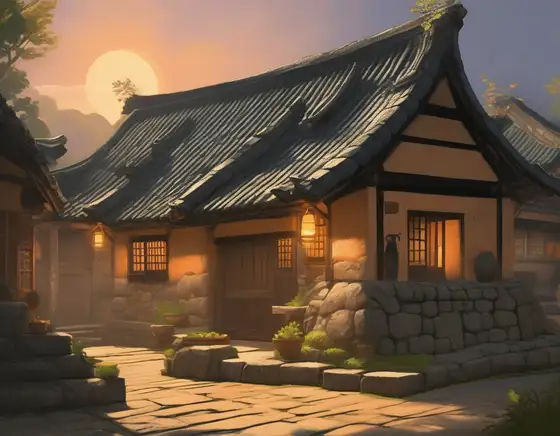
The Kinmen Cleaver
Kinmen · History · Postwar
The evening of 23 August 1958, and shells from across the water begin to fall on Kinmen, for weeks on end; later it became “odd days shelling, even days not”. You are apprentice to the village blacksmith. He says shell casings are good steel, and a cleaver made from one lasts a lifetime. Today is an even day. Tomorrow is odd.
The 823 bombardment began on 23 August 1958, and “odd days shelling” went on until 1979. Kinmen people forged the fallen casings into cleavers, and Kinmen knives are famous to this day.
Play “The Kinmen Cleaver”

The Baxian Caves
Changbin, Taitung · History · Prehistory
On the cliffs above the Changbin shore a row of caves faces the Pacific. In the oldest of them, people were lighting fires and knapping stone thirty thousand years ago. The dig team has gone down for dinner and left you, the newest hand, to pack the tools. The moment your head torch goes off, the cave fills with the sound of stone on stone: tock, tock, tock, unhurried, as if someone is waiting for you to give something back.
In 1968 archaeologists dug a great many chipped stone tools out of the Baxian Caves and named them the Changbin culture: the oldest prehistoric culture known in Taiwan, at least thirty thousand years old, from a time when part of the Taiwan Strait was dry land. The tale is made up; the caves are real, right beside Highway 11.
Play “The Baxian Caves”
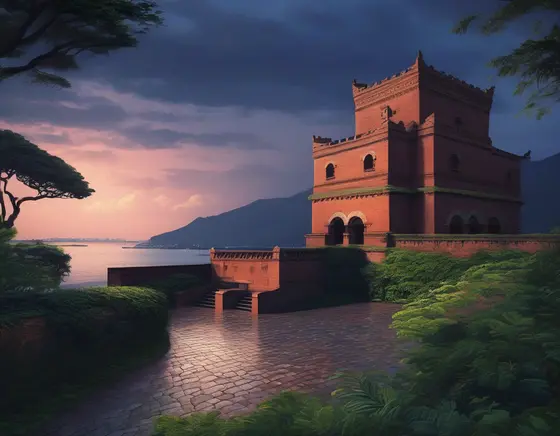
Fort San Domingo
Tamsui, New Taipei · History · Dutch and Spanish era
A typhoon night, the waves running high at the mouth of the Tamsui. You are on night watch at Fort San Domingo, and as you pass through the consul’s residence the old hall clock, stopped for decades, starts to tick. Then you hear someone speaking Spanish, then Dutch, and last a very polite English voice: “Excuse me, what year is it?” The doors close one after another.
The fort has stood at the mouth of the Tamsui for nearly four hundred years: the Spanish built it in 1628, the Dutch rebuilt it in stone in 1644, and from 1867 to 1972 the British rented it as their consulate. The red-brick residence beside it dates from 1891. “Red hair” was what people in Taiwan called the Dutch. The night watch and the clock are made up; the fort is real.
Play “Fort San Domingo”
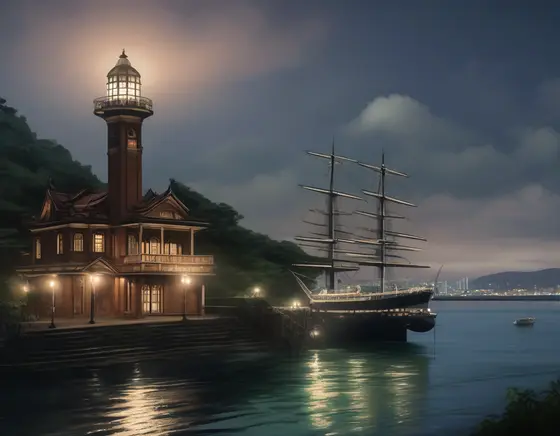
The British Consulate at Takow
Shaochuantou, Kaohsiung · History · Qing era
Takow in the 1880s. A typhoon is bearing down from the sea, and outside the harbour a ship loaded with sugar is waiting to come in. The consul has gone to Taiwan-fu, leaving only you, the junior clerk, in the red-brick house. The harbour men say the signal must be turned to face the wind and then lit, so the captain knows whether to run for it. And just now every door in the building has jammed.
The Treaty of Tianjin (1858) opened Taiwan’s ports; Takow became a treaty port and Britain set up a consulate there. The red-brick residence on the hill at Shaochuantou, built in 1879, is among the oldest Western-style buildings left in Taiwan, and from it you can see the whole of Kaohsiung harbour. The clerk and the ship are made up.
Play “The British Consulate at Takow”
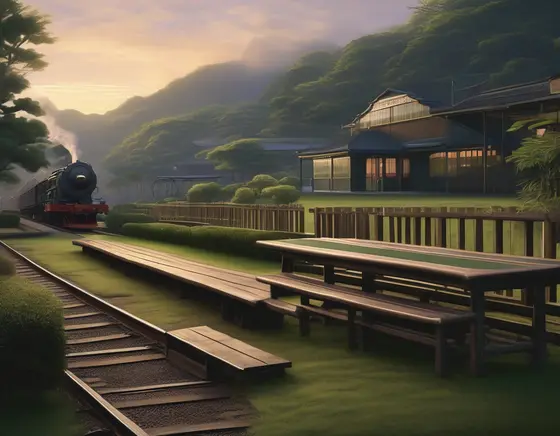
Kano, 1931
Kagi Agriculture and Forestry School, Chiayi · History · Japanese era
July 1931. Tomorrow at first light the Kagi Agriculture and Forestry School baseball team takes the train to Keelung and the boat to Japan, to play at Koshien. Nobody in the dormitory can sleep. The ball the whole team signed, left on the coach’s desk, is gone, and they all swore to take it onto the field. You are the team manager, and the dawn train will not wait.
In 1931 the Kagi Agriculture and Forestry School reached Koshien for the first time, with Japanese, Han Chinese and Indigenous players, coached by Hyotaro Kondo. They fought all the way to the final, lost to Chukyo Commercial and came home runners-up. The ball and the manager are made up; the tournament is real.
Play “Kano, 1931”
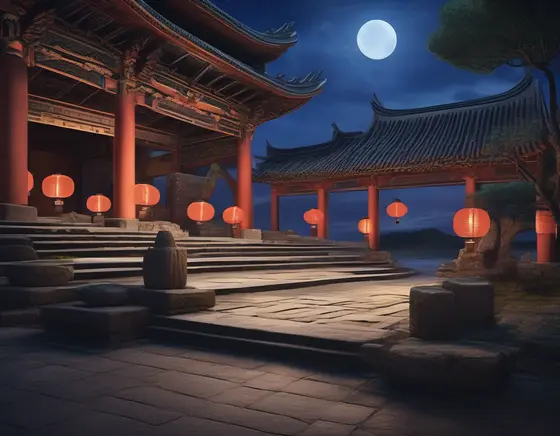
The Mazu Temple of Penghu
Magong, Penghu · History · Dutch and Spanish era
1919, and the Mazu temple at Magong is being restored. Digging the foundations of the rear hall, a worker’s hoe strikes something hard: a stone with writing on it, mostly buried in earth. The keeper says it was left three hundred years ago and must be brought up before dawn, to set Mazu’s mind at rest. He leaves it to you and goes to the harbour for help, saying only: “First find out who made the red-haired men leave.”
In 1604 the Dutchman Wybrand van Warwijck occupied Penghu with his fleet, hoping to trade with Ming China. The Ming sent Shen You-rong to talk, and without a battle he persuaded the Dutch to leave. The stone was dug up during repairs to the temple in 1919 and still stands there. The Penghu Mazu Temple is the oldest in Taiwan. The keeper and the night of the digging are made up.
Play “The Mazu Temple of Penghu”

The Eluanbi Lighthouse
Hengchun, Pingtung · History · Qing era
1883, and the lighthouse at Eluanbi has been lit only a few months. The reefs here are many, and ships used to strike them. Tonight a typhoon comes up the Bashi Channel; the old keeper has hurt his leg and sends you to light the lamp alone. The oil is locked in the store, the lens is caked with salt, and the tower’s iron doors slam one after another in the wind. Out at sea, a ship’s light is already pitching.
The Eluanbi lighthouse was lit in 1883, built by the Qing at Taiwan’s southern tip. Because of clashes after wrecks on this coast, its walls were cut with gun loopholes and a ditch dug round it: one of the world’s few armed lighthouses. It was destroyed twice in wars and rebuilt, and is called the Light of East Asia. The keeper’s boy is made up.
Play “The Eluanbi Lighthouse”
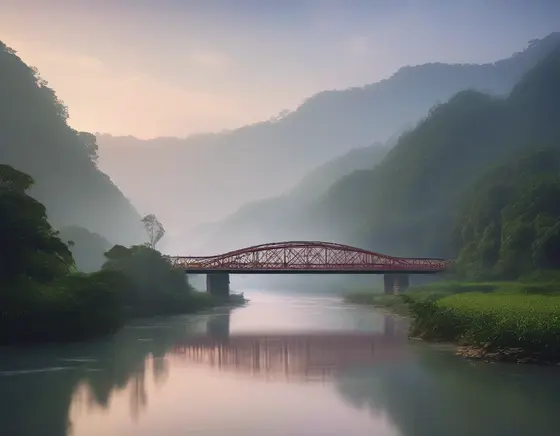
The Xiluo Bridge
Xiluo, Yunlin · History · Postwar
Winter 1952, and the Xiluo Bridge over the Zhuoshui River is all but finished. Its piers were sunk in the Japanese era, then left for more than a decade when the war came, and people still crossed the river by bamboo raft. Tomorrow the ribbon is cut, and the foreman wants the last row of rivets in tonight. But wind-blown sand has jammed the hut locks, and the mist on the river thickens.
The piers of the Xiluo Bridge were begun in 1937 and abandoned in the war; after it, American aid paid for the steel spans, and the bridge was finished at the end of 1952, nearly two kilometres long, then the longest in the Far East. Only then were the roads of north and south Taiwan truly joined. The young worker is made up.
Play “The Xiluo Bridge”
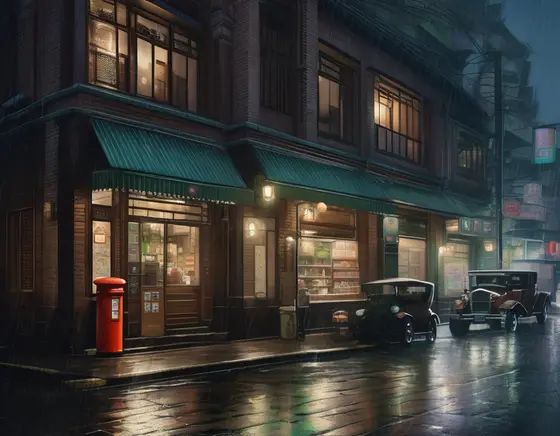
The Taiwan Cultural Association
Da’an Hospital, Dadaocheng, Taipei · History · Japanese era
The night of 16 October 1921, and a light still burns on the first floor of the Da’an Hospital in Dadaocheng. Dr Chiang says every member must have their invitation to tomorrow’s founding meeting at the Jingxiu girls’ school. You are a student who has just joined, and the letters are yours to send. But the hospital has closed, the membership roll is locked in the doctor’s cupboard, it is raining, and a policeman’s footsteps come and go under the arcade.
On 17 October 1921 the Taiwan Cultural Association was founded in Taipei, with Lin Hsien-tang at its head and the doctor Chiang Wei-shui driving it. Chiang wrote “A Clinical Lecture”, examining Taiwan as a patient and diagnosing “intellectual malnutrition”; his prescription was reading rooms, libraries and classes. The Association toured the island with talks and films, and many heard the words “the Taiwanese people” for the first time. The student who sent the letters is made up.
Play “The Taiwan Cultural Association”
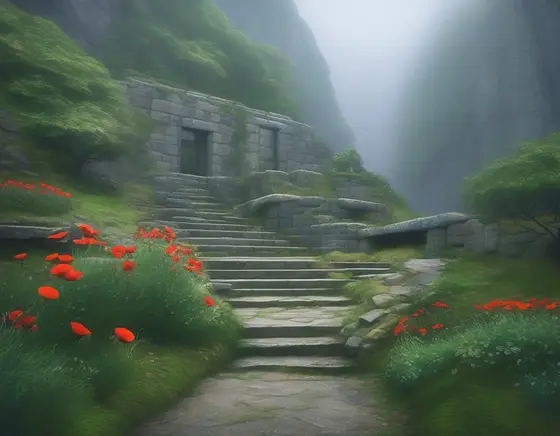
The Kinkaseki Camp
Jinguashi, New Taipei · History · Japanese era
November, and a fine rain on the hills of Jinguashi. Tomorrow is the service at the prisoner-of-war memorial park, and people are flying in from Britain for it. You are a volunteer, and your job is to frame the letters an old soldier once wrote to his mother and set them before the memorial wall. But the box with the letters is locked, its code is split across the order of service, and the mist keeps rolling up the hill.
From 1942 to 1945 the Japanese army held prisoners of war at Kinkaseki, most of them British soldiers captured at Singapore, and forced them to work in the copper mine; many never went home. For years after the war this history was forgotten; the site is now the Taiwan POW Camps Memorial Park, with a service every November. The soldier and his letters are made up.
Play “The Kinkaseki Camp”
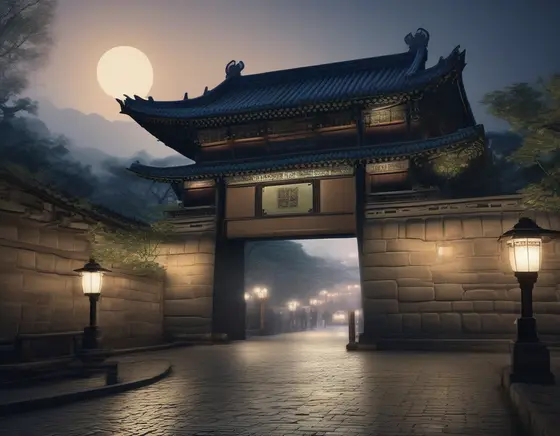
The Walls of Taipei
The North Gate, Taipei · History · Qing era
The tenth year of Guangxu, and the walls of Taipei are finished at last. Tonight the gates close at night for the first time, and the old soldier who keeps them has given it to you, his apprentice: beat the closing drum, then lock the North Gate with the great key. But someone has put the drumsticks away, the key is locked in a chest at the yamen, and outside the wall porters are still hurrying in, calling for you to wait.
Taipei’s walls were begun in 1882 and finished in 1884, the last walled city the Qing built in Taiwan. In the Japanese era the walls were pulled down to make roads and only the gates were kept; of the five, the North Gate alone keeps its first form, now a national monument. The apprentice is made up.
Play “The Walls of Taipei”
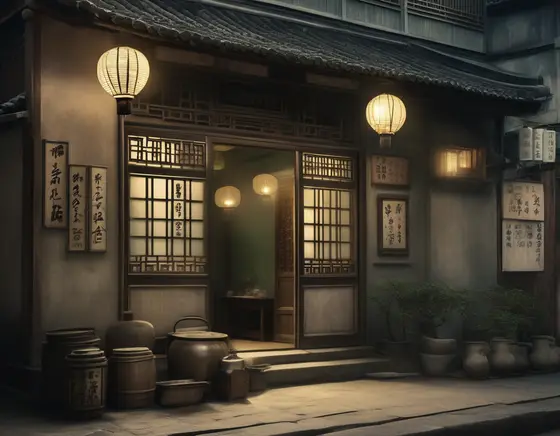
The Clinic on Kanxi Street
Kanxi Street, Tainan · History · Qing era
Summer 1865, and a foreign doctor’s clinic has opened on Kanxi Street in Fucheng: James Maxwell, come from Scotland. Rumours are going round that the foreign doctor cuts out hearts and livers for his medicines. Tonight the doctor must withdraw to Takow, and he leaves you one thing to do: the porter with a high fever in the back room must have his medicine before dawn. But the medicine cupboard is locked, and the crowd outside keeps growing.
In 1865 Dr James Maxwell opened a clinic and mission on Kanxi Street in Fucheng; within a month rumours forced him out to Kiau at Takow, though he later returned. Tainan’s Sin-lau Hospital of today grew from that small clinic, and the day it opened, 16 June, is kept as the founding day of the Presbyterian Church in Taiwan. The helper and the porter are made up.
Play “The Clinic on Kanxi Street”

The Double-Heart Weir
Qimei, Penghu · History · Qing era
The old fishermen of Qimei say the weirs were built stone by stone by their forefathers, carried out into the sea: at high tide the fish swim in, and when the sea goes out they cannot get back. Last night a typhoon passed, and it has broken a gap in the wall of the double-heart weir. Today it is your family’s turn to keep the weir, the afternoon low tide lasts only two hours, and if the gap is not mended the whole village will have no fish to share this season.
The weirs are fish traps the people of Penghu laid from basalt and coral stone on the tidal reef; there are several hundred across the islands, and the double heart of Qimei is the most famous. A weir used to belong to the families who built it together, who kept it and shared its catch in turns. With fewer fish today most weirs are kept for visitors, and few people still know how to mend them. The typhoon night is made up.
Play “The Double-Heart Weir”

The Huwei Cane Train
Huwei Sugar Works, Yunlin · History · Postwar
The 1960s, and the last night of the crushing season at the Huwei sugar works. The last cane train still stands by the fields, piled high with cane, and must be in the works before dawn. But the driver’s key is locked in the station-master’s office, someone has thrown the points the wrong way, and by the track a crowd of children waits to pull out a stick of cane.
The Huwei works began crushing cane in the Japanese era and still does today, one of the few sugar mills still working in Taiwan. The little cane trains ran on track only 762 mm wide, about half the 1435 mm standard, and so were called “five-tenths trains”. Many older people remember running after them as children to pull out a cane, while the driver only smiled. This night is made up.
Play “The Huwei Cane Train”
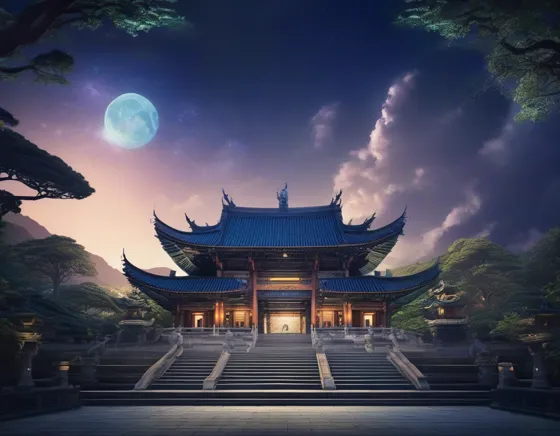
Longshan Temple, the Night of the Raid
Longshan Temple, Monga, Taipei · History · Japanese era
1945, the last year of the war. The air-raid siren sounds again. The temple keeper sends everyone into the shelter but stays behind himself, saying he must take Guanyin down from the altar. You are his grandson and go back for him. The main hall is empty, only the candles flicker. The planes come closer, and the wind slams the temple doors.
Monga’s Longshan Temple was built in 1738 by settlers from Jinjiang, Nan’an and Hui’an in Quanzhou, its Guanyin brought from the Longshan Temple of Anhai back home. An air raid in 1945 burned the main hall; people say the statue of Guanyin came through unharmed, and the hall was rebuilt after the war. The keeper and his grandson are made up.
Play “Longshan Temple, the Night of the Raid”
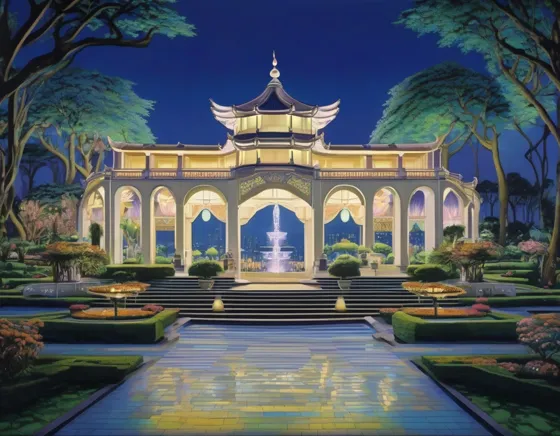
The 1935 Taiwan Exposition
The exposition grounds, Taipei · History · Japanese era
The 28th of November 1935, the last night of the Taiwan Exposition. The visitors have gone; you are the night watchman. In the machinery hall the gramophone that sings by itself begins to turn, and the model train starts running on its own. One by one the great doors swing shut, and the loudspeaker says: “The exposition shall stay open for ever.”
In the autumn of 1935 Taipei held a fifty-day Taiwan Exposition (10 October to 28 November) marking forty years of Japanese rule. Goods from every part of the island and new machines went on show, and the visits ran well past two million. The watchman, the model room and the clockwork that would not stop are made up.
Play “The 1935 Taiwan Exposition”
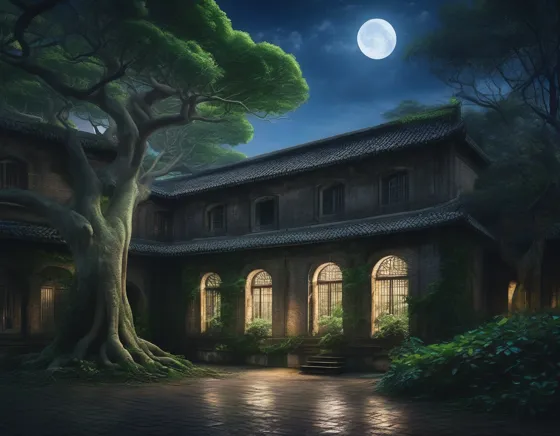
The Tree House of Anping
An old warehouse in Anping, Tainan · History · Qing era
In the old warehouse by Anping harbour that the banyan swallowed, people hear someone counting money at night. You came to take night photos; the moment you step inside, the tree’s aerial roots drop over the doorway and wind round the door, one by one. On the wall hangs a yellowed ledger, its last page reading: “The salt is not all weighed. Nobody leaves.”
After Anping opened to foreign trade in the 1860s, the British firm Tait & Co. built a warehouse here; under Japanese rule it became a salt store of the Dai Nippon Salt company. Left empty after the war, it was slowly swallowed by banyans, and in 2004 it was opened to visitors: today’s Anping Tree House. The counting, the ledger and the night of weighing are made up.
Play “The Tree House of Anping”
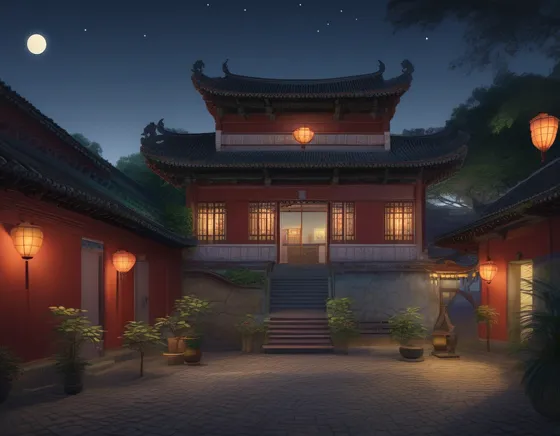
The Two Towers of Chihkan
Chihkan Tower, Tainan · History · Dutch and Spanish era
After Chihkan Tower closes, you stay behind as the night volunteer. In the moonlight the few lengths of Dutch-era red brick wall suddenly grow tall into a whole castle, yet the Wenchang pavilion still stands on top: two buildings in one place, neither giving way. A voice speaking Dutch and a voice reciting poetry say at once: “This place is mine.” The gate closes.
Chihkan Tower in Tainan stands on Fort Provintia, built by the Dutch in 1653; in 1661 the fort fell to Koxinga’s army. In the Qing era people built the Wenchang pavilion, a sea god’s temple and more on its old walls; nine stone tortoises bearing tablets from the Qianlong years stand in its yard; a few runs of Dutch red brick can still be seen today. The night volunteer and the two quarrelling towers are made up.
Play “The Two Towers of Chihkan”

The Last Train over Longteng
The Longteng broken bridge, Sanyi, Miaoli · History · Japanese era
An April night, and white tung blossoms fall like snow on the broken bridge. You love railways and have stayed to photograph it after dark. At midnight the broken arches join up again, one by one, and a train whistle sounds in the distance. The signal still shows red, and the little station’s door has shut. The phone rings in the master’s office: “The last train is coming over the bridge, and the signal hasn’t changed!”
The Yutengping bridge at Sanyi in Miaoli is a red brick arch bridge on the old mountain railway, built early in the twentieth century; the great earthquake of 21 April 1935 broke it, leaving its piers and arches; the 921 earthquake of 1999 broke more. Today it is called the Longteng broken bridge, and every spring white tung blossoms fall all around it. The railway lover, the signal and the last train are made up.
Play “The Last Train over Longteng”
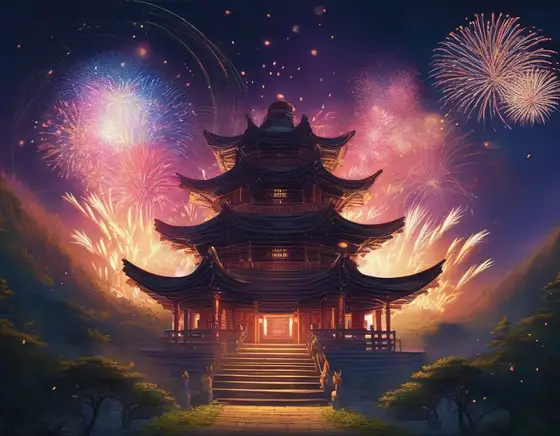
The Beehive Rockets of Yanshui
Yanshui, Tainan · Festivals · Qing era
At the end of the Qing a great plague came to Yanshui and many died. The townspeople carried Lord Guan through the streets in procession, letting off fireworks all the way to drive the sickness out. Tonight is the Lantern Festival and you are to light the first firework tower; helmet, towel and thick jacket are ready, but someone has walked off with the fuse.
The Yanshui beehive fireworks began in the Guangxu years of the Qing, the story goes, to drive out a plague with Lord Guan’s procession. Every Lantern Festival people put on helmets and thick jackets and go to be “bombed” for a safe year. If you go, cover up well.
Play “The Beehive Rockets of Yanshui”

The Sky Lanterns of Pingxi
Pingxi, New Taipei · Festivals · Qing era
In the Qing, bandits often came down on Pingxi, and the villagers would flee deep into the hills with what they could carry. Those who stayed to guard the houses, once the bandits had gone, would send up sky lanterns to tell the people in the hills: it’s safe, come home. Tonight there are still people waiting up there. You have the lantern, but the matches and the brush for writing on it are missing.
Pingxi’s sky lanterns began, the story says, as a signal of safety in the Qing. Every Lantern Festival now, thousands of lanterns covered in wishes rise over Pingxi.
Play “The Sky Lanterns of Pingxi”

The Burning of the Royal Boat
Donggang, Pingtung · Festivals · Folk
Once every three years Donggang welcomes the royal lords, and on the last night the royal boat is sent away, loaded with rice, firewood, pots and everyday things, so the lords can carry the plague out to sea and never bring it back. Tonight you are one of the loaders; everything must be aboard by dawn, but the wind has scattered the lists all over the store.
Donggang’s royal lords festival comes every three years, ending with the burning of the royal boat on the beach to send the plague away. The boat is built the old way, for real, to be used just this once.
Play “The Burning of the Royal Boat”
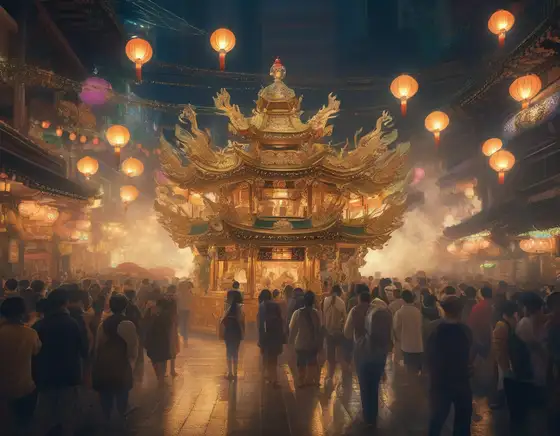
The Dajia Mazu Pilgrimage
Dajia, Taichung · Festivals · Folk
Every spring Mazu of Dajia’s Jenn Lann Temple leaves home for nine days and eight nights, walking to Xingang in Chiayi and back, hundreds of thousands following and waiting to crawl beneath her palanquin. Tonight is the eve of her setting out; you are new to the bearers, and your seniors want the route map and incense flags ready, but the store by the temple is in chaos.
The Dajia Mazu pilgrimage takes place every year, nine days and eight nights on foot to Xingang and back, one of Taiwan’s largest religious events. Households along the way set out snacks and water for the walkers.
Play “The Dajia Mazu Pilgrimage”
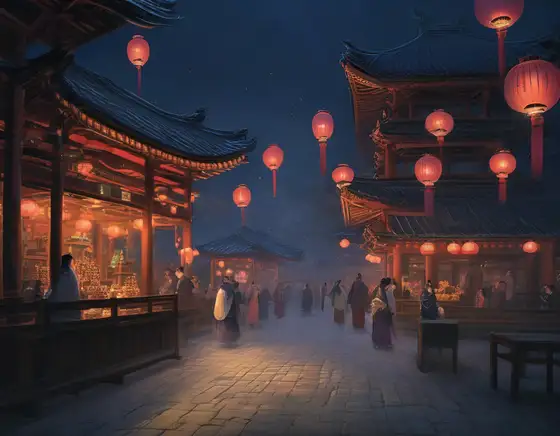
Toucheng’s Ghost Pole Climb
Toucheng, Yilan · Festivals · Qing era
The last night of the seventh month, and Toucheng’s great platform is piled with offerings for the wandering souls, its poles greased with beef tallow. When the souls have eaten their fill, the teams climb to “seize the offerings”; whoever takes the flag at the top has a fair wind all year. You are the newest on your team, and your seniors’ gloves and ash have gone missing.
Toucheng’s Ghost Grappling takes place on the last night of the seventh month: first the wandering souls are fed, then teams climb the greased poles and offering towers for the flag at the very top. The poles are terribly slippery, and teams climb as human ladders, layer by layer.
Play “Toucheng’s Ghost Pole Climb”
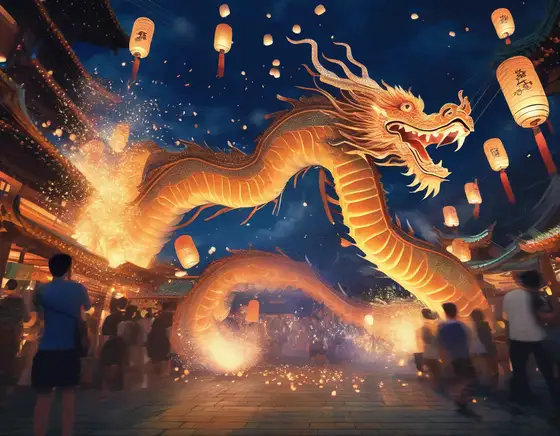
The Fire Dragon of Miaoli
Miaoli · Festivals · Folk
Lantern Festival in Miaoli, and the Hakka “fire the dragon”: the paper dragon has its eyes dotted to call down the dragon god, is paraded through the streets to be pelted with firecrackers, and is burned on the last night to send it back to heaven. Tonight is the eye-dotting, and you are the dragon-maker’s apprentice, but your master’s cinnabar brush has gone missing.
Miaoli’s Fire Dragon is a Hakka Lantern Festival custom: the dragon, once its eyes are dotted, tours the streets under firecrackers and is finally burned to send it home, for a year of good weather.
Play “The Fire Dragon of Miaoli”
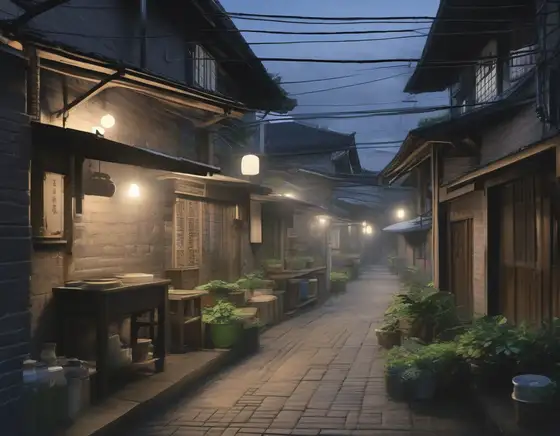
The Last Night in the Village
A military dependents’ village · Culture and crafts · Postwar
The military village comes down tomorrow. The old neighbours have all moved out; only grandma’s iron gate is still open. You have come back to help pack, and before you leave you want to cook her one more bowl of grandpa’s braised beef noodles. Grandma says that before he died, grandpa kept looking for a letter.
After 1949 many soldiers from the mainland and their families lived in military villages. Only when visits home were allowed in 1987 did many hear from their families at last. Most of the villages are gone now; a few remain as cultural parks. (This family is made up.)
Play “The Last Night in the Village”
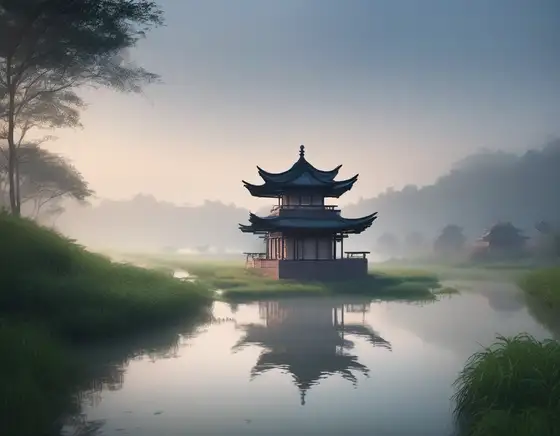
The Pavilion for Written Paper
Meinong, Kaohsiung · Culture and crafts · Qing era
In Meinong’s Hakka villages everyone knows: paper with writing on it must never be thrown away or trodden on, but burned in the pavilion for written paper and its ash sent down the river. Since the old scholar died, a lifetime of his writing has lain in the courtyard house and nobody dares touch it. Tonight you are helping clear up, and among the papers someone seems to be turning pages.
The Hakka revere the written word: paper with writing is burned in the paper pavilion and the ash sent down the river. Meinong still has its Qing-era pavilion.
Play “The Pavilion for Written Paper”

The Paper Umbrella of Meinong
Meinong, Kaohsiung · Culture and crafts · Folk
When a Meinong Hakka family marries off a daughter, they give a pair of oil-paper umbrellas: “paper” sounds like “children”, and an open umbrella is a circle, wishing children soon and a full, round life. The wedding is at dawn, but the old master who has made umbrellas all his life has fallen ill and asks you to finish the last one. The bamboo ribs, the paper and the tung oil are all here somewhere, but in which room?
Meinong oil-paper umbrellas are a traditional Hakka craft. A pair is given when a daughter marries, “paper” sounding like “children” and the open umbrella a circle, for children and a full life. A few old shops in Meinong still make them.
Play “The Paper Umbrella of Meinong”
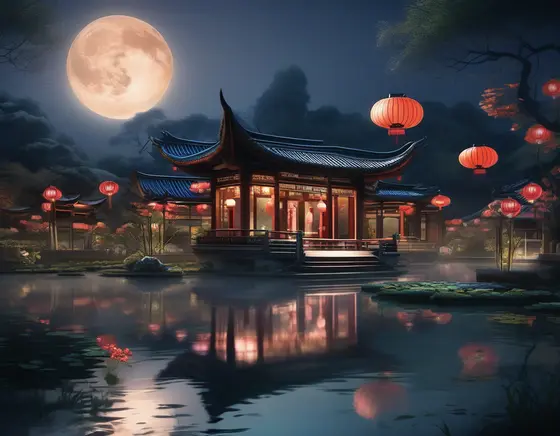
The Lin Family Garden
Banqiao, New Taipei · Culture and crafts · Qing era
In the Guangxu years the Lin family of Banqiao hired a troupe to sing in the garden for three days. On the third night the leading lady stopped halfway through, went off to change her costume, and never came back. More than a century later you are photographing the garden at night, and from the stage across the pond comes the sound of a fiddle: the song is still waiting at its halfway point. She has left a note asking you to find her.
The Lin Family Mansion and Garden was the private garden the Lins of Banqiao built at the end of the Qing, mostly between 1888 and 1893. The little stage before Fangjian Studio stands across a pond, so the family could watch plays from the study. The garden is now a national monument open to visitors. The troupe and the singer are made up.
Play “The Lin Family Garden”

Longing for the Spring Breeze
Dadaocheng, Taipei · Culture and crafts · Japanese era
Dadaocheng, 1933. The studio above the record shop has just finished a new song, and the master must catch tomorrow’s boat to Japan for pressing. You are the errand boy, last to leave. As you reach for the light, the gramophone in the corner starts turning by itself, playing the very song recorded today. Yet the master is locked in the cabinet.
In the 1930s Taipei’s record companies began recording Taiwanese-language pop; the masters were shipped to Japan to be pressed and the records sold back in Taiwan. “Longing for the Spring Breeze”, music by Teng Yu-hsien and words by Li Lin-chiu, came out in 1933, and people still sing it today. The errand boy and the gramophone are made up.
Play “Longing for the Spring Breeze”

Water of Immortality
An art museum, Taipei · Culture and crafts · Postwar
The night before the opening, 2021. A great crate, nailed tight, has come up from Taichung to the museum, and inside is a marble statue missing for decades. You are the conservator, and the director wants it on its pedestal tonight. Someone has put the crate’s key away, the gallery doors are locking one by one, and inside the marble you seem to hear water running.
“Water of Immortality” is a marble by Huang Tu-shui, the first Taiwanese to enter the Tokyo School of Fine Arts; it was accepted for Japan’s Imperial exhibition in 1921. After the war it vanished: a family in Taichung had quietly kept it for decades, and it was shown again only in 2021, later named a national treasure. The conservator’s night is made up.
Play “Water of Immortality”
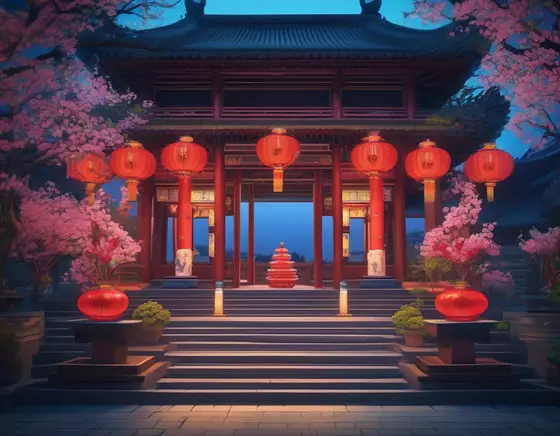
Turning Sixteen
Kailong Temple, Tainan · Culture and crafts · Qing era
Tomorrow is the Qixi festival, and your cousin turns sixteen at the Kailong Temple. Grandma went out at dawn to order the paper pavilion for the Seven Ladies and has asked you to have everything ready tonight: the pavilion, the offerings, your cousin’s new clothes. Then the power goes out in her old house, nobody knows which room the pavilion is in, and the old clock on the wall ticks on towards seven.
In Tainan, turning sixteen means praying to the Seven Ladies at the Kailong Temple on Qixi, the parents holding up a paper pavilion while the child crawls under it, boys from the left and girls from the right, to come of age. The custom goes back to the dock workers of Fucheng’s Five Canals in the Qing, who were paid half a wage until sixteen and a man’s full wage after. The cousin and the blackout are made up.
Play “Turning Sixteen”

The Salt Pans of Qigu
Qigu, Tainan · Culture and crafts · Today
May 2002, the last day of the Qigu salt works. Grandpa has made sun-dried salt all his life, and after tomorrow nobody in Taiwan will. He wants to rake up the last heap himself and put it on the salt mountain. But when you reach the hut at dawn, the salt rake is gone, the store is locked, and the sea wind ruffles the water in the pans.
Taiwan’s salt-making began in 1665, when Chen Yong-hua of the Zheng regime opened the salt pans at Laikou, and went on along the south-west coast for more than three hundred years. In 2002 the Qigu works stopped, and with them Taiwan’s sun-dried salt. The salt mountain at Qigu is still there, a sight for visitors now. Grandpa and that day are made up.
Play “The Salt Pans of Qigu”
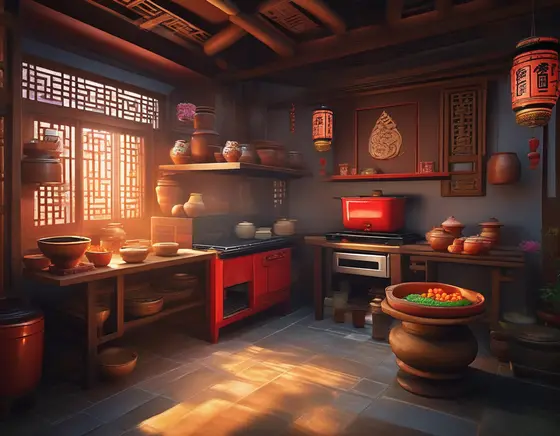
Seeing Off the Kitchen God
Grandma’s kitchen · Culture and crafts · Folk
The 24th of the twelfth lunar month, and Grandma says tonight the gods are seen off. The yellowed picture of the Kitchen God on the kitchen wall has watched this family for a whole year: who ate the offerings, who quarrelled with Mum, who left rice in the bowl. Tonight he goes up to report to the Jade Emperor. Before bed Grandma tells you: set out the right offerings and burn the paper horse, or next year will go hard.
In Taiwanese custom the gods are seen off on the 24th of the twelfth lunar month and welcomed back on the 4th of the first. The Kitchen God watches the family in the kitchen all year, and on that day goes up to report. People offer him sweet sticky things, tangyuan and maltose, so that his mouth stays sweet and says only good, and burn a paper horse for him to ride. With gas cookers in most homes now, fewer people still keep his picture on the wall. Grandma and the family are made up.
Play “Seeing Off the Kitchen God”
The Boaster’s Tea of Beipu
Beipu old street, Hsinchu · Culture and crafts · Qing era
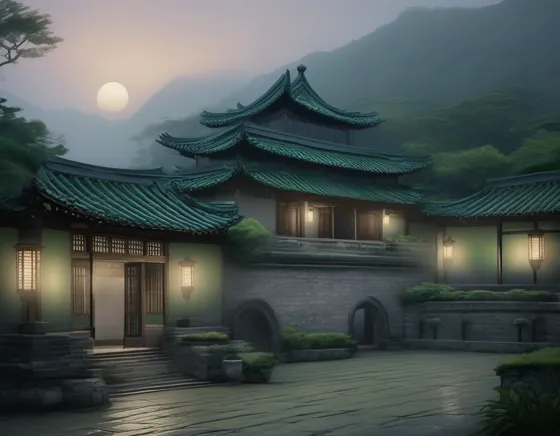
Tonight the tea shop on Beipu’s old street keeps its lights off. Grandpa’s notebook says that one summer, when little insects bit the whole garden of leaves, everyone told him to throw them away; he made tea of them anyway, sold it dear, and was laughed at as a boaster. He locked the way he made that tea inside the old house and left one line: “Only one who can smell the honey will find it.” You push open the shop’s back door, and it sticks shut behind you.
Oriental Beauty tea really is made around Beipu and Emei: the leaves must first be bitten by the tea green leafhopper to get their honey scent. The old people in the hills say a farmer once made tea from bitten leaves, sold it dear, and was laughed at as a boaster, and that is how “Boaster’s Tea” got its name. Grandpa and his old house are made up.
Play “The Boaster’s Tea of Beipu”
The First School of Taiwan
The Confucius Temple, Tainan · Culture and crafts · Koxinga era
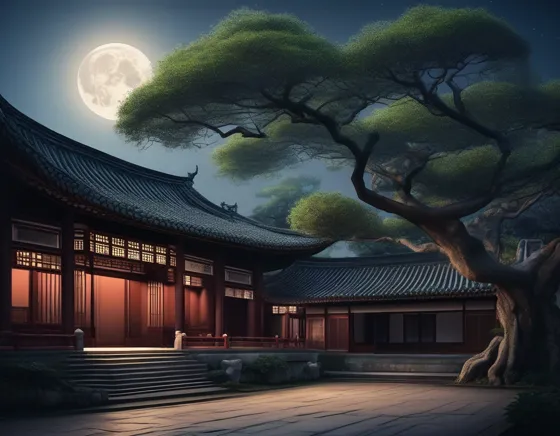
The exam is tomorrow. You have heard that a prayer at the Confucius Temple beforehand works wonders, so you climb the wall in at night. Under the moon the door of the Hall of Great Accomplishment opens by itself. Inside a lamp burns, and on the table lies an exam paper: “Answer it, and you may go home.” Behind you the door closes softly.
Tainan’s Confucius Temple was built under the Zheng kingdom and finished in 1666, Taiwan’s first school of Confucian learning: hence “the First School of all Taiwan”. The stone at its gate tells every official, civil or military, to dismount and walk; the Minglun Hall was where lessons were held. You and the exam paper are made up.
Play “The First School of Taiwan”
The Kiln Fire of Yingge
An old kiln yard in Yingge, New Taipei · Culture and crafts · Qing era
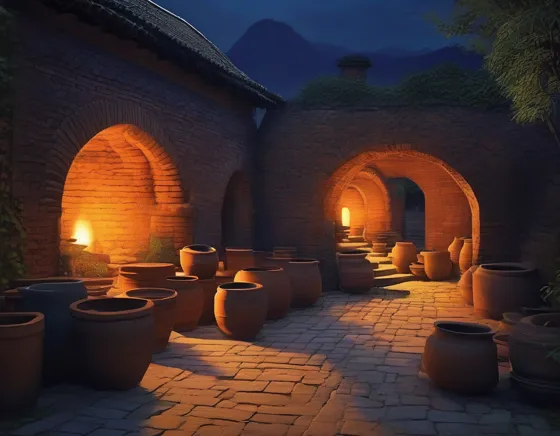
Tonight the old kiln yard in Yingge fires its kiln for the last time, and the master has left you, the apprentice, to keep the fire. At midnight the bird-shaped Yingge rock on the hill breathes out a great cloud of fog; it drifts all the way into the yard, and the kiln fire sinks low. On the shelves the vases turn one by one, their mouths towards you: “If the fire dies, we will never be finished.”
Yingge in New Taipei has made pottery for about two hundred years and is called Taiwan’s pottery town. Its name comes from the Yingge rock on the hill, shaped like a bird; legend says that when Koxinga’s army passed, this fog-breathing bird monster led it astray, and the soldiers fired a cannon and broke off its head. The Yingge Ceramics Museum opened in 2000. The apprentice, the firing and this night are made up.
Play “The Kiln Fire of Yingge”
The Blue of Sanxia
Sanxia old street, New Taipei · Culture and crafts · Qing era
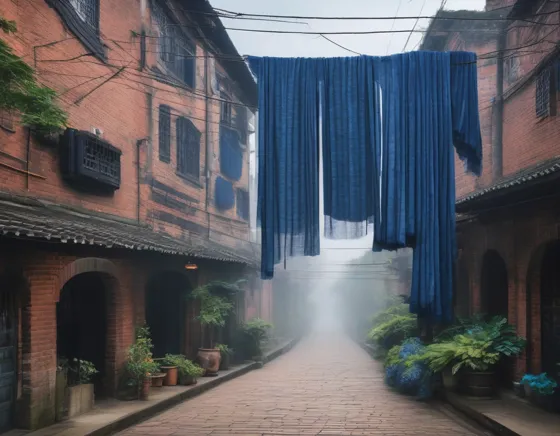
In the dye works on Sanxia’s old street a whole row of freshly dyed blue cloth hangs to dry. At midnight it rains; you run out to bring the cloth in and find every piece has turned white, and the blue is gone from the vats. The wind slams the works’ door, and from the bottom of a vat a voice says: “The blue must be made again and the cloth dyed again. Finish before dawn, or this street will lose its colour.”
In the Qing era Sanxia was known for indigo: leaves of the dacing plant were soaked in vats with lime to make the dye, and its cloth sold far and wide. Sanxia’s old street still keeps the red brick arcades and carved facades rebuilt in 1916, and today people there teach indigo dyeing again. The dye works, that vat and this night are made up.
Play “The Blue of Sanxia”

The Last Show at Neiwan
The old cinema, Neiwan, Hsinchu · Culture and crafts · Postwar
Tonight the old cinema in Neiwan shows its last film. When the audience has gone you, the projectionist, stay to pack the reels, but the projector starts turning by itself. On the screen is Neiwan many years ago: timber trains, miners with their carrying poles, a packed cinema. The film runs on and on; the doors close, as if everyone still cannot bear to leave.
The Neiwan line in Hsinchu opened in 1951 to carry timber, coal and cement out of the hills. Neiwan’s old cinema was known for its hand-painted film posters and later became a Hakka restaurant; today the line and the old street are a favourite weekend outing. The projectionist and the film that would not end are made up.
Play “The Last Show at Neiwan”
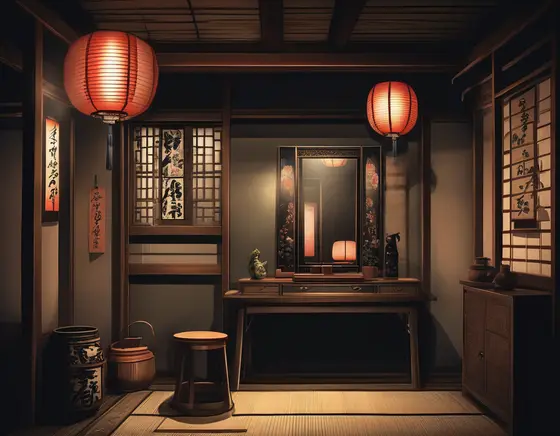
The Ghost of Yotsuya
Yotsuya, Tokyo, Japan · Taiwanese ghost stories
An old theatre in Tokyo is staging “Yotsuya Kaidan” next month. Japanese companies keep a rule: before putting on this play, everyone goes to pray at the Oiwa Inari shrine in Yotsuya. This time they all said they were too busy, and nobody went. Tonight, at the last rehearsal, the actress playing Oiwa went into the mirror room backstage and never came out. On the dressing table lies an old wooden comb that is not a prop.
“Tokaido Yotsuya Kaidan” is a kabuki play by Tsuruya Nanboku, first staged in Edo in 1825: Oiwa, betrayed by her husband Iemon, returns after death to find him. To this day Japanese companies staging it go first to pray at the Oiwa Inari Tamiya shrine in Yotsuya, Tokyo. The Inari spirit is fond of fried tofu. The theatre and the actress are made up.
Play “The Ghost of Yotsuya”
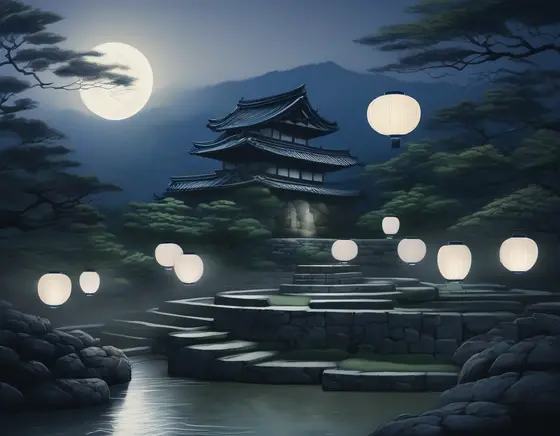
Okiku and the Ten Plates
Himeji Castle, Hyogo, Japan · Taiwanese ghost stories
At midnight a woman’s voice rises from the well at Himeji Castle: one plate, two, three… she reaches nine and stops, and then comes weeping. The castle town says it is Okiku counting plates. One of her master’s ten heirloom plates went missing; she was blamed for it and died in the well. Tonight you keep watch in the castle; the lanterns by the well light one by one and every door back is shut.
“Banshu Sarayashiki” is one of Japan’s best-known ghost tales: the maid Okiku, falsely accused of losing one of ten heirloom plates, was thrown into a well, and ever after counts plates there each night, weeping when she reaches nine. Himeji Castle really does have an “Okiku’s Well”. The night watch and the found plate are made up.
Play “Okiku and the Ten Plates”

Yuki-onna
A ferry in old Musashi, Japan · Taiwanese ghost stories
Snow has closed the mountain, and you and an old woodcutter shelter in the ferryman’s hut. You wake at midnight: the door stands open, and a woman in white bends over the old man and breathes on him. She turns to you: “You are young. I will spare you. But of tonight, you must tell no one.” The snow keeps falling, the hut door is sealed by drifts, and the fire is nearly out.
“Yuki-onna” is in “Kwaidan”, published by Lafcadio Hearn (Koizumi Yakumo) in 1904: the woodcutter Minokichi sees the snow woman in a blizzard and is spared, on condition he never tells. Years later he marries O-Yuki and one night tells the story, and O-Yuki is the snow woman. In this version, you keep your word.
Play “Yuki-onna”
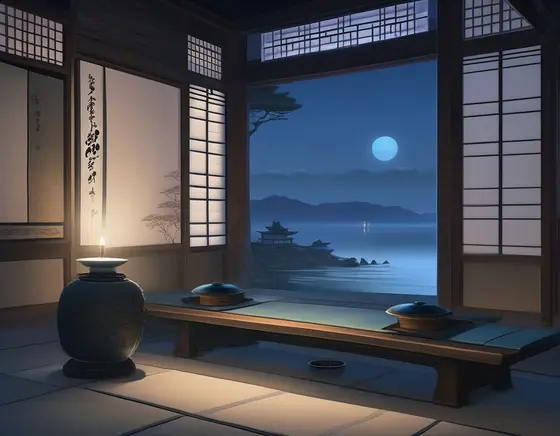
Hoichi the Earless
Akamagaseki, Shimonoseki, Japan · Taiwanese ghost stories
At the Amidaji temple in Akamagaseki lives Hoichi, a blind biwa player. Every midnight a samurai comes to lead him away to sing the fall of the Heike before an unseen, noble audience. The priest has found out: the audience are the ghosts of the Heike, drowned at Dan-no-ura centuries ago. Tonight the priest is away, and has told you, the young acolyte, to write the sutra over every part of Hoichi before dark. Miss one place and the ghosts will see him.
“Mimi-nashi Hoichi” is in Lafcadio Hearn’s “Kwaidan” (1904). In the original, the place the priest forgot was the ears, so the ghost tore them away and Hoichi was known ever after as “Earless”. Akama Shrine in Shimonoseki still has a hall for Hoichi.
Play “Hoichi the Earless”
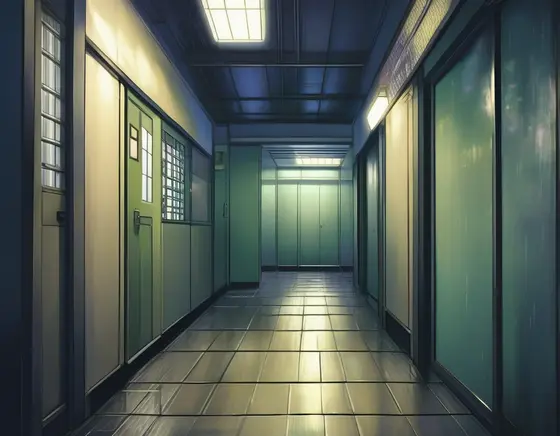
Hanako of the Toilet
An old school in Japan · Taiwanese ghost stories
You teach at this old school, and tonight is your turn on night duty. On the third floor the light in the girls’ toilet flickers, and the door of the third stall is knocked three times from inside. Every child in Japan knows the tale: knock three times, ask “Hanako-san, will you play?”, and someone answers. But tonight it was knocked from inside first. Behind you, the stairwell’s iron door closes.
“Hanako of the Toilet” is Japan’s most widespread school ghost story, told since about the 1950s: knock three times on the third stall of the third-floor girls’ toilet and call her name, and a girl in a red skirt answers. The teacher on duty and the ball are made up.
Play “Hanako of the Toilet”

The Kappa Pool of Tono
Tono, Iwate, Japan · Legends and folklore · Folk
The inn keeper in Tono said to keep away from the deep green pool behind the hill: a kappa lives in it. At midnight you hear a splash in the courtyard well; the inn’s bell is gone, and a line of wet footprints, half frog and half small hand, leads off toward the hill. The paper doors slide shut by themselves, and from outside comes a giggle.
Tono in Iwate is the home of the Tales of Tono (1910), and several of its stories are about kappa. Behind Joken-ji temple there really is a “Kappa Pool”, where people still fish for kappa with cucumbers. The old stories say a kappa’s strength is the water in the dish on its head, and that if you bow, it bows back and spills it. The inn and the bell are made up.
Play “The Kappa Pool of Tono”

The Fox’s Wedding
An Inari shrine in the Japanese hills · Legends and folklore · Folk
The sun is still shining, yet it begins to rain. Grandma calls this weather the fox’s wedding: the foxes are holding a marriage, and people must not watch. But on the shrine steps you pick up a white hairpin. A line of lanterns lights up on the hill and drifts toward you, and the torii closes behind you. From inside the palanquin a soft voice says: “My hairpin…”
In Japan, rain while the sun shines is called kitsune no yomeiri, the fox’s wedding, and strings of ghost lights on the hills at night are kitsune-bi, fox fire. Foxes are the messengers of Inari, and Inari shrines are often offered fried tofu. The shrine, the hairpin and that wedding are made up.
Play “The Fox’s Wedding”
The Bell of Dojo-ji
Dojo-ji, Wakayama, Japan · Legends and folklore · Folk
The abbot of Dojo-ji says that for a thousand years the temple has not dared hang a new great bell, because Kiyohime would come back. Tonight the new bell is to be hung, and you are here to help. At midnight a mist rises off the river, a mist like a very long serpent, and slowly coils round the bell tower. The temple gates close one after another, and from inside the bell comes the sound of someone weeping.
The tale of Anchin and Kiyohime belongs to Dojo-ji in Wakayama: the young monk Anchin broke his promise to Kiyohime; she followed him all the way to the temple, turned into a great serpent and coiled round the bell he had hidden under until it glowed red-hot. Dojo-ji still tells the story with picture scrolls. The new bell and this night are made up.
Play “The Bell of Dojo-ji”

Urashima’s Treasure Box
The shore of Tango, Kyoto, Japan · Legends and folklore · Folk
In the little museum by the sea lies a black lacquer box said to be the one Urashima brought home. Tonight after closing you hear the sound of waves inside it. The gallery walls turn slowly to the colour of the sea, and fish swim past you. A gentle voice says: “You have been here three days. Outside, a very long time has passed.”
Urashima Taro is one of Japan’s oldest tales (an early form is in the eighth-century records of Tango Province): a fisherman saves a turtle, is taken to the undersea Dragon Palace, spends three days with Princess Otohime, and comes home to find three hundred years gone; he opens the box she told him never to open, white smoke pours out, and he is suddenly old. Urashima Shrine in Kyotango still keeps the tale. The museum and this night are made up.
Play “Urashima’s Treasure Box”
The Killing Stone
Nasu Yumoto, Tochigi, Japan · Legends and folklore · Folk
Since the Killing Stone of Nasu split in two, people say the nine-tailed fox has got out. You volunteer on the trail, and in the evening a thick fog rises and the smell of sulphur grows stronger. The red bibs on a row of little Jizo statues lift in the wind all at once, and in the fog nine white tails wind slowly round you.
The Killing Stone lies at Nasu Yumoto in Tochigi, where volcanic gas has always seeped from the ground. Legend says the nine-tailed fox, who had been the court beauty Tamamo-no-Mae, was found out and turned into this stone, which killed any creature that came near, until a monk named Gennō split it (Japanese carpenters’ hammers are called gennō, said to be after him). In March 2022 the stone was found split in two, and the news went round the world. The volunteer and this night are made up.
Play “The Killing Stone”

The Tengu of Mount Takao
Mount Takao, Tokyo · Legends and folklore · Folk
On a path on Mount Takao you pick up a feather fan, and the way down disappears. A strange wind rises in the cedars, wings beat overhead, and a shadow with a crow’s beak and great black wings stands on a treetop: “Give back the fan. But first, prove you are worthy to walk this mountain.” The temple gate slowly closes behind you.
Mount Takao near Tokyo is a holy mountain, and its temple, Yakuo-in, keeps statues of tengu. In Japanese legend tengu are beings of the mountains: the great tengu red-faced and long-nosed, the crow tengu with beaks like crows, both winged, carrying feather fans and dressed as mountain ascetics. The hiker, the fan and this night are made up.
Play “The Tengu of Mount Takao”
The Inn of the Long Neck
An old inn on the Nakasendo, Japan · Taiwanese ghost stories · Folk
On the Nakasendo in the Edo period you spend the night at an old inn. By day the landlady is gentle and kind, but at midnight you wake to see a long shadow on the paper door: a head on a neck that stretches longer and longer, reaching slowly down the corridor. The inn’s front door is barred, and the shadow stops outside your room and asks softly: “Are you asleep, sir?”
The rokurokubi is a yokai of Edo-period tales: an ordinary woman by day whose neck grows very long at night. An older telling, the nukekubi, has the head leave the body to fly about; if the body is moved, the head cannot return. The English book Kwaidan (1904) retold such tales too. The inn and this night are made up.
Play “The Inn of the Long Neck”

The Crane’s Return
A thatched house in Japan’s snow country · Legends and folklore · Folk
On a night of heavy snow a woman in white knocks and says she is lost. She stays, and every night shuts herself in to weave, saying only: “While I weave, please, never look.” Tonight the loom falls silent, and from behind the paper door comes a soft sob. Snow seals the front door; you cannot go out, and you must not look.
The Crane’s Return is a Japanese folk tale: a man frees a crane caught in a trap; later a woman comes to his house and offers to weave for him, on condition that he never looks while she works. He cannot help peeking, sees a crane plucking its own feathers into the cloth, and the crane must fly away. Japan tells it in many versions. This night, and the ending that keeps the promise, are made up.
Play “The Crane’s Return”

Kaguya’s Five Tasks
An old house in a Japanese bamboo grove · Legends and folklore · Folk
Under the full moon of mid-autumn, a bamboo in the grove is shining. You push open the old house’s door, and from behind a screen a gentle voice says: “I must return to the moon. But the five tasks I set long ago were never truly done. When they are, I can go in peace.” The door closes behind you, and the moonlight grows brighter.
The Tale of the Bamboo Cutter, written in about the tenth century, is often called Japan’s oldest story: Princess Kaguya, found in a shining bamboo, grows up and sets her suitors five impossible tasks (the Buddha’s stone bowl, a jewelled branch from Hōrai, the fire-rat’s robe, the jewel from a dragon’s neck, the swallow’s cowry shell), and at the full moon of the eighth month returns to the moon. The old house and this night are made up.
Play “Kaguya’s Five Tasks”
The Masked Woman
A Japanese suburb, 1979 · Taiwanese ghost stories · Postwar
In 1979 a rumour runs through all of Japan: in a back street at night, a woman in a white mask and a long coat will stop you and ask, “Am I pretty?” You are late leaving work and turn into an empty lane; the street lamps go out one by one. By the phone booth ahead stands a woman in a mask. Slowly she turns her head.
The rumour of the slit-mouthed woman swept Japan in 1979: on a road at night, a woman in a long coat and a white mask would stop people and ask, “Am I pretty?” The rumour also told how to escape: answer “so-so” (maa-maa), throw her a hard candy (bekko-ame), or say “pomade” three times. The office worker, the phone booth and this night are made up.
Play “The Masked Woman”
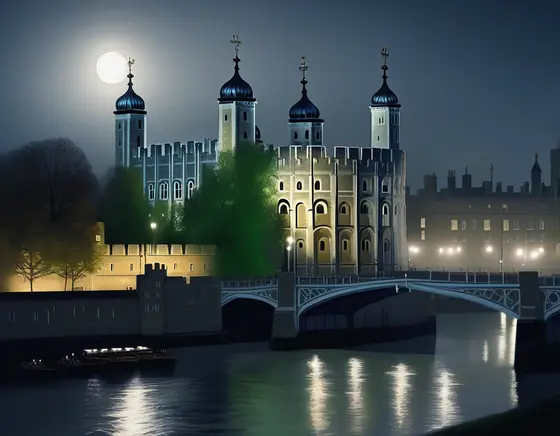
The Tower of London
The Tower of London, England · Taiwanese ghost stories
The Tower of London has an old legend: if all the ravens leave, the kingdom will fall. So at least six are always kept there. Tonight you are working at the Tower, and a little after nine the Ravenmaster finds the cage empty. A bell rings; behind a window of the White Tower a woman in a long gown walks slowly by, and they say it is Anne Boleyn. The Ceremony of the Keys must be done before ten: in some seven hundred years it has never missed a night.
The Ceremony of the Keys begins at 9.53 every night and is said to have run for about seven hundred years. At least six ravens are kept at the Tower, a rule said to date from Charles II. Anne Boleyn, Henry VIII’s second queen, was executed inside the Tower on 19 May 1536, and people have claimed to see her ever since. The night the ravens went missing is made up.
Play “The Tower of London”
The Brown Lady
Raynham Hall, Norfolk, England · Taiwanese ghost stories
September 1936. You are a magazine’s photographic assistant, sent with the photographer to Raynham Hall in Norfolk to shoot the great house inside. The house has a famous ghost: the Brown Lady, in a brown brocade gown, often seen on the grand staircase. The moment the shutter clicks the photographer shouts that someone is on the stairs, yet nothing is there. The plate must be developed tonight in the cellar, but one by one the doors to the darkroom have locked.
The Brown Lady is said to be Lady Dorothy Walpole (1686 to 1726), sister of the Prime Minister Robert Walpole. In 1936 two photographers for Country Life took a famous “ghost photograph” on Raynham Hall’s grand staircase, and people still argue whether it is real. The assistant is made up.
Play “The Brown Lady”
Black Shuck
Bungay, Suffolk, England · Taiwanese ghost stories
Sunday morning, 4 August 1577. A thunderstorm such as no one has seen breaks over Bungay. The town crowds into St Mary’s church; lightning flashes, and in the middle of the nave stands a black dog bigger than a calf, its eyes like two coals. You are the bell-ringer, the bell rope has snapped, and the wind slams the church doors one after another. The old folk say: when the bell rings, the black dog will go.
Black Shuck is a black-dog legend long told in the east of England. On 4 August 1577, in a great thunderstorm, people in the churches of both Bungay and Blythburgh said a black dog burst in. The scorch marks on Blythburgh church’s north door, which locals call the devil’s fingerprints, are still there, and Bungay’s town crest has a black dog on it. The bell-ringer is made up.
Play “Black Shuck”

Bloody Mary
A lodging house, London · Taiwanese ghost stories
London in the 1890s, in the rain. You keep this lodging house. A few young lady lodgers on the third floor made a bet: at midnight, by candlelight, say “Bloody Mary” three times to the mirror. Now a woman who is none of them stands in the third-floor mirror, and no door in the house will open. You must find out who called her, and then cover that mirror.
“Bloody Mary” is the best-known mirror game in the English-speaking world: light a candle before a mirror, say her name three times, and she appears. No one can say for sure where it comes from; some tie it to Mary I, the sixteenth-century queen of England. The house and the lodgers are made up. Don’t try it at home.
Play “Bloody Mary”

The Loch Ness Monster
Loch Ness, Scotland · Legends and folklore
Spring 1934. You are a London paper’s photographer, sent to Loch Ness to wait for the monster. Three nights in the ruins of Urquhart Castle and not one picture. Tonight a long wake is moving across the water towards the castle, but your film is not on you, and the wind has jammed the castle doors.
The earliest record of the monster is the seventh-century Life of St Columba, which says that in AD 565 he drove off a beast at the River Ness. After the road along the loch opened in 1933, sightings suddenly multiplied. The most famous picture, the 1934 “Surgeon’s Photograph”, was admitted only in 1994 to be faked with a toy submarine. People still wait by the loch today. The reporter and the night are made up.
Play “The Loch Ness Monster”
Under Mary King’s Close
Edinburgh, Scotland · Taiwanese ghost stories · Folk
Under Edinburgh’s City Chambers lies a seventeenth-century street. You are the new night guide; when the last tour has gone, the oil lamps underground light themselves one by one. Heavy footsteps come down the stone stair, and a figure in a beaked mask passes with a lantern, leaving one line behind: “The doors are sealed. Nobody leaves until the sickness is gone.”
Mary King’s Close is an old Edinburgh lane named after a merchant, Mary King. Plague struck Edinburgh in 1645; in 1753 the Royal Exchange (today’s City Chambers) was built over these closes, burying their lower floors; they opened to visitors in 2003. The story that the sick were walled in alive is a later myth. Plague doctors wore beaked masks. The night guide and this night are made up.
Play “Under Mary King’s Close”

Borley Rectory
Essex, England · Taiwanese ghost stories · Folk
In 1938 Borley Rectory is called “the most haunted house in England”. You have been sent to write about it and stay the night. At midnight every service bell in the house rings at once, and crooked pencil writing appears on the wall: “Please help me.” On the path outside a figure in a grey nun’s habit walks slowly, head bowed. The wind slams the front door.
Borley Rectory in Essex was built in 1862–63 and in the 1930s was called “the most haunted house in England”. Its best-known tale is of a nun who walked the garden path (“the Nun’s Walk”); people who lived there said bells rang by themselves and writing appeared on the walls. The house burned in 1939 and was pulled down in 1944. The writer, the letter and this night are made up.
Play “Borley Rectory”
Spring-heeled Jack
London, 1838 · Legends and folklore · Folk
London, 1838, and everyone is talking of a strange figure who clears walls at a single leap: black cloak, eyes like fire, Spring-heeled Jack. You are the lamplighter on the night round, and tonight the fog is thick. You have just lit the gas lamp at the alley’s mouth when something lands on the roof with a thud; the lamps go out one by one, and the iron gates at both ends of the alley clang shut.
Spring-heeled Jack was first talked of around London in 1837 and 1838: tall, cloaked, said to clear walls at a bound, with glowing eyes and clawed hands, out at night to frighten people. In 1838 the Lord Mayor of London spoke publicly of the reports; later other towns claimed to see him too, into the early 1900s. To this day nobody knows who he was. The lamplighter and this night are made up.
Play “Spring-heeled Jack”

The Sword of Tintagel
Tintagel, Cornwall · Legends and folklore · Folk
On the cliffs of the Cornish coast stand the castle ruins where legend says King Arthur was born. At low tide you walk into Merlin’s Cave beneath them, where a stone holds a glowing sword. The tide turns and floods the cave mouth, and words rise on the rock: “Only the worthy may draw it.”
Tintagel is on the north coast of Cornwall; the castle ruins on its cliffs were built in the 1230s. In the 1130s a writer, Geoffrey of Monmouth, wrote that King Arthur was conceived here, and the sea cave below came to be called Merlin’s Cave. A bronze figure named Gallos has stood on the headland since 2016, and a footbridge joined the island in 2019. The stone and this sword are made up.
Play “The Sword of Tintagel”

The Card Game at Glamis
Glamis Castle, Scotland · Taiwanese ghost stories · Folk
At Glamis Castle they say there is a room no one may enter. Legend has it that centuries ago a bearded earl insisted on playing cards on a Sunday, saying he would play with the Devil himself if need be; a stranger knocked, and the two were sealed in the room, playing to this day. On a stormy night you lose your way into the castle and hear, behind a wall, cards being shuffled and a roar of laughter. Every door in the corridor is locked.
Glamis Castle in Angus, Scotland, is famous for its legends: a secret room no one may see; “Earl Beardie”, who said on a Sunday he would play cards with the Devil if need be and was sealed in a room playing for ever; a Grey Lady in the chapel. In Shakespeare’s Macbeth, Macbeth is the Thane of Glamis. The lost traveller, the last hand and this night are made up.
Play “The Card Game at Glamis”

The Silver Arrow of Sherwood
Sherwood Forest, Nottingham · Legends and folklore · Folk
You are the night ranger of Sherwood Forest. At midnight a campfire flares beneath the great oak, and a band in green sits round it singing. A voice says: “The Sheriff has taken the village’s grain again. Whoever wins the silver arrow at tomorrow’s contest can win back the granary key.” One by one the forest paths vanish, leaving only the one to the contest.
Robin Hood is the outlaw of English ballads told since the Middle Ages: with Little John, Friar Tuck, Maid Marian and others he lived in Sherwood Forest near Nottingham, robbed the rich to give to the poor, and outwitted the Sheriff of Nottingham again and again; one tale has him win a silver arrow at an archery contest. In Sherwood stands the Major Oak, many centuries old. The ranger, this contest and this night are made up.
Play “The Silver Arrow of Sherwood”

Midsummer at Stonehenge
Stonehenge, Salisbury Plain · History · Prehistory
On the night before midsummer you keep watch at Stonehenge. Past midnight the great stones turn slowly, one by one, and blue light shines in the gaps between them. Someone sings low in the wind: “The sun must rise through the right gate, or the year will not begin.” A thick fog rises on the plain, and you cannot leave the circle.
Stonehenge on Salisbury Plain was built in stages between about 3000 and 2000 BC; it lines up with the midsummer sunrise and the midwinter sunset; its smaller “bluestones” were brought from the Preseli Hills in Wales, some 240 kilometres away. A medieval tale says the wizard Merlin moved the stones from Ireland. The night watch and the turning stones are made up.
Play “Midsummer at Stonehenge”

The Grey Man of Ben Macdui
The Cairngorms, Scotland · Taiwanese ghost stories · Today
You spend the night in a bothy in the Cairngorms, and a thick fog comes down. At midnight crunching footsteps sound in the snow outside, each stride many times a man’s, circling the hut. In the fog beyond the window stands a grey shape taller than the hut. Snow seals the door, and a dread you cannot name rises in you.
Ben Macdui in the Cairngorms, 1,309 metres high, is Britain’s second-highest mountain. Climbers tell of a huge grey shape, the Big Grey Man, that follows you in the mist with crunching steps and brings a sudden terror; a well-known climber spoke of his own encounter in 1925. Many think it is a Brocken spectre, a trick of mist and light, together with the fear people feel on a mountain. The bothy and this night are made up.
Play “The Grey Man of Ben Macdui”

Herne the Hunter
Windsor Great Park, England · Taiwanese ghost stories · Folk
You are the night gardener of Windsor Great Park. At midnight chains rattle and a horn sounds beneath the old oak; a pale figure with great stag’s antlers on his head rides out of the mist, followed by a pack of hounds you cannot see. The park gates close one after another, and he says in a deep voice: “My horn is lost. Until it is found, tonight’s hunt will not end.”
Herne the Hunter is the ghost of Windsor Forest in English legend: antlers on his head, chains dragging, haunting an old oak (Herne’s Oak). Shakespeare named him in his comedy The Merry Wives of Windsor, written about 1597. The gardener, the horn and this night are made up.
Play “Herne the Hunter”

The Lambton Worm
The River Wear, County Durham · Legends and folklore · Folk
You stand by an old well in County Durham, said to be the very one where the young Lambton heir threw a little worm centuries ago. Suddenly a stench rises from the well, and a grey worm thicker than a house crawls out coiled round the hill and blocks the bridge over the river. The village bell rings, and an old woman says: “You must face it in the river, in armour set with spikes.”
The Lambton Worm is a legend of County Durham: young John Lambton, fishing on a Sunday instead of going to church, caught a small worm-like creature and threw it down a well; it grew into a huge worm that ravaged the land. Returning from the Crusades, he followed a wise woman’s advice, put on armour set with spikes, and fought it in the River Wear. The visitor, the well and this night are made up.
Play “The Lambton Worm”